


199. THE EXORCIST, 1973
The masterpiece that changed movies forever

What horror film became one of the biggest box-office hits of all time and the first to earn a Best Picture Oscar nomination? Which movie caused audience members to faint, vomit, or fall into hysterics? What became my first R-rated film because my mother refused to see it, leaving my father to take my sister and me before we were even teenagers? Which film was so frightening that the person I was living with wouldn't let me keep a DVD copy in the house? What movie became a cultural phenomenon, often considered the scariest film ever made?
The answer to all is "The Exorcist".

A supremely crafted, frightfully compelling film about a young girl possessed by the devil, “The Exorcist” made Hollywood (and audiences) take horror seriously. It revolutionized the genre, proving that horror — previously regarded largely as niche entertainment — could be both a blockbuster and an artistic triumph.

Alongside “The Godfather”, “Jaws”, and “Star Wars”, “The Exorcist” was one of the defining blockbuster phenomena of the 1970s. Among its many honors, it received ten Academy Award nominations (winning two), and seven Golden Globe nominations (winning four), including a Best Picture nomination from each. Decades later, Rolling Stone magazine ranked it the Greatest Horror Film of All Time, Variety placed it second, and the American Film Institute named it the 3rd Most Thrilling American Film in history.

Even though I was very young, I can still remember the incredible buzz surrounding this film. It was a time when almost everyone went to the movies, and when a great or shocking film came along, it became a nationwide conversation and something everyone had to see. People weren't just saying “The Exorcist” was scary — they were saying it was terrifying beyond anything they'd ever seen.

I'm still not sure why my father took my sister and me (maybe he didn't want to go alone?), but I vividly remember being nervously excited in anticipation. After all, this was my first official R-rated "adult" movie. Oddly, I wasn't traumatized by it. I do recall being frightened most by a bed shaking scene and by the film's unsettling atmosphere. Maybe it helped that I wasn't raised believing in the devil? In any case, I'd never seen anything remotely like it.

This paragraph and the next contain a brief plot summary, so if you prefer to know nothing, skip ahead two paragraphs until after you've seen the film. “The Exorcist” opens in northern Iraq, where “Father Merrin", an archaeologist and Catholic priest, encounters an ancient demon he's previously battled. Deeply shaken, he has a premonition that he will soon be called upon to confront it once more.

The story then shifts to Georgetown, Washington, D.C., where we follow two seemingly unrelated lives: famous actress “Chris MacNeil”, raising her twelve-year-old daughter, “Regan” on her own; and “Father Damien Karras”, a Jesuit priest and psychiatrist struggling with a crisis of faith. When the normally sweet “Regan” begins behaving strangely — swearing, lying, and exhibiting increasingly disturbing behavior — “Chris” desperately searches for an explanation. After exhausting every conventional possibility, she comes to realize her daughter has been possessed by a demon claiming to be the Devil. The only remaining hope is an exorcism.

It may sound like "The Exorcist" is about demonic possession, but it's so much more. It's a deeply human meditation on sacrifice, love, faith, and the eternal struggle between good and evil. By grounding itself in profound emotional and psychological truth, the film transcends horror, becoming a gripping and harrowing journey into fear, evil, faith, doubt, and the triumph of goodness over darkness.

While there are scenes in “The Exorcist” that are not for the faint of heart (and certainly not for the prudish), the film’s greatest triumph is how ingeniously it creates and sustains a fiercely unnerving ambiance from beginning to end. And by taking its time, it allows us to identify and sympathize with each of its characters, making every moment of shock, terror, heartbreak, and hope all the more intense.

“The Exorcist” shattered box-office records in the United States, Europe, and Japan, with audiences standing in lines for hours to see it. Filled with blasphemous language, shocking content, groundbreaking special effects, and a new level of graphic realism, it inspired a wave of horror films that sought to shock, repulse, and terrify moviegoers. But "The Exorcist's" impact extended far beyond movie screens. It sparked heated debate over the existence of the devil and exorcism, overwhelmed Catholic clergy with requests from frightened viewers who feared they (or someone they knew) might be possessed, and thrust the Church into an unexpected public conversation about demonic possession.
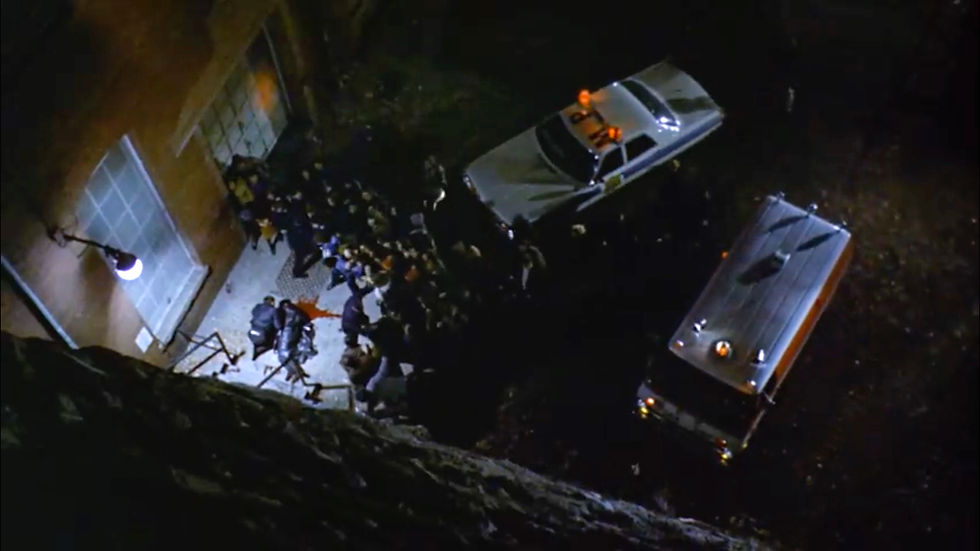
“The Exorcist” also helped change who was running and investing in Hollywood. As Peter Biskind recounts in “Easy Riders, Raging Bulls”, after seeing the film’s extraordinary box-office receipts, Warner Brothers marketing executive Richard Lederer warned story executive Barry Beckerman: “The fun is over. There are guys in New York looking at these figures, saying, ‘This is the kind of money you can make in the movie business?’. We’ve been having a good time out here and been very successful, but it’s gonna get real serious after this”. As Biskind concludes: “Like ‘The Godfather’ the year before, ‘The Exorcist’ changed the business".

The origins of "The Exorcist" are almost as fascinating as the film itself. While studying English literature and philosophy at Georgetown University, William Peter Blatty read a 1949 Washington Post front-page story, "Priest Frees Mt. Rainier Boy Reported Held in Devil's Grip", about an alleged demonic possession of a fourteen-year-old Maryland boy. The story stayed with him for decades.

After becoming a Hollywood comedy screenwriter, Blatty wanted to prove he could write drama and decided to turn the case into a novel. Research proved difficult. Up to then, the Catholic Church was secretive about exorcisms — reporting only two in the twentieth century, and wanted to protect the boy’s identity. Eventually, Blatty tracked down one of the priests involved who'd kept a diary of the events. Though he couldn’t reveal everything, he shared enough to help Blatty, who then transformed the victim into a twelve-year-old girl, built an entirely new story around the case, and wrote “The Exorcist”.

Published in 1971, "The Exorcist" quickly became a bestseller. Warner Brothers purchased the film rights and appointed Blatty as producer. Warners approached several prominent directors, including Mike Nichols, Arthur Penn, and Peter Bogdanovich, but all passed. Blatty wanted William Friedkin, feeling his documentary background and uncompromising style could bring the story the realism it needed. Warners initially resisted, but changed its mind after the release of Friedkin’s Oscar-winning "The French Connection".

Friedkin loved the novel but hated Blatty's completed, more commercialized screenplay. He helped Blatty rewrite it to remain more faithful to the book, allowing the story to unfold with deliberate, believable realism. As Friedkin assembled his crew and immersed himself in the subject of exorcism, he began talking with exorcism witnesses, and gained access to the notes and diaries kept by priests involved in the Maryland boy's exorcism.
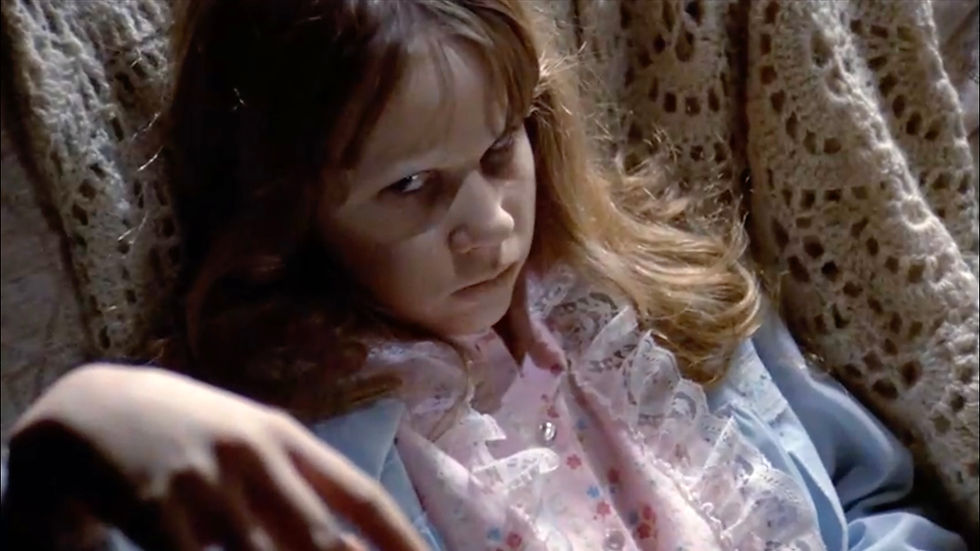
In his autobiography "The Friedkin Connection: A Memoir", Friedkin wrote that the notes described dozens of terrifying incidents, including “rapping and scratching in the walls of the hospital room… furniture moving as though by an unseen force… the shaking of the mattress… sexual references to the priests and nuns… religious relics flying off the walls… agonizing shouts and screams that seemed to emanate from deep within the boy… curses, swearing, and diabolic laughter... gyrations and physical strength beyond his natural powers… blood, scabs, and welts appearing on his skin… violent outbursts and attempts to kill the priests… the letters H-E-L-L appearing on his chest” and more. These incidents, and others, were incorporated in one way or another into the screenplay.

Blatty’s very smart script exhausts every medical and psychological explanation before embracing the supernatural, making the horror feel both believable and essential. It won him a Best Adapted Screenplay Academy Award, and as the film’s producer, he also received a Best Picture Oscar nomination. Blatty makes a very brief cameo as a mustached film crew member on the set of “Chris’” movie, telling director “Burke Dennings”: "The scene really is... will you just consider if whether or not…”.

The man most responsible for “The Exorcist” becoming a work of art is director William Friedkin. Believing the film would only succeed if audiences accepted every impossible event as possible, he set out to make a realistic film about inexplicable events. Rather than treating the story as horror, he approached it as a drama about the mystery of faith, encouraging Blatty to shape the screenplay accordingly. From the opening scenes of “Merrin” at an actual archaeological dig and walking the streets of Iraq, to “Chris” and “Karras” moving through Georgetown, Friedkin grounds the film in an entirely real world before unleashing the unexplainable horrors in “Regan’s” bedroom.

In addition to location shooting in Iraq, Georgetown, and New York City, Friedkin consulted prominent physicians to ensure the accuracy of the film's medical procedures, diagnoses, and psychiatry. He cast actual medical technicians to perform the angiography, genuine priests and doctors in supporting roles, and had two Jesuit priests oversee the authenticity of the exorcism.

Friedkin makes us deeply identify with his characters before subjecting them to horrific events. We share “Merrin’s” unease over his archaeological discovery, “Karras’” crisis of faith, and the loving bond between “Chris” and “Regan". He also devotes extensive time and authentic detail to “Regan’s” hellacious medical examinations, making us feel compassion for her plight even before the supernatural enters the picture. As a result, we root for every character, making everything that follows carry extraordinary emotional weight.

And in a courageous move — not for shock value but for realism — Friedkin holds nothing back in depicting evil. Nothing’s subtle about the possession or the way he presents it. So by the time we reach the exorcism, we're so emotionally invested in these characters' struggles that it feels less like watching a movie than living through hell along with them.

Friedkin’s artistry came at a price — his relentless perfectionism created enormous production challenges. Dissatisfied with the completed sets just before filming began, he fired the art director and delayed production while new ones were built. Determined to see the actors' breath during the exorcism scenes, he refrigerated the bedroom set to below freezing, forcing the crew to shoot in three-minute intervals before the heat from the lights made the breath disappear. He even halted production to send a prop master across town for preservative-free bacon because he disliked the way ordinary bacon curled while frying.

Legend has it that a crew member returned after three days of illness only to find Friedkin still filming the same shot. His demands were equally extreme with actors. He fired blanks without warning to startle them, secretly filmed rehearsals, and even slapped one of the actual priests cast in the film moments before his biggest scene to heighten his emotion.

Yet Friedkin brings every element together — from the performances and storytelling to the technical craftsmanship — with such extraordinary skill that the supernatural feels utterly real. It's an extraordinary feat of filmmaking, and one that earned him a Best Director Academy Award nomination.


Born in Chicago to Jewish Ukrainian immigrants, William Friedkin began working in the mailroom of a local TV station right after high school. By eighteen, he was directing live television and documentaries (some sources say as many as 200 TV shows early in his career). At twenty-one, he saw “Citizen Kane”, which opened his eyes to the power of film, inspiring him to become a filmmaker. In 1962, he directed the television documentary “The People vs. Paul Crump”, about a man on death row who insisted he was innocent but no one believed him. The film prompted a review of Crump's case and ultimately helped save his life, reaffirming to Friedkin, the power of cinema. He began directing theatrical films with “Good Times”, “The Night They Raided Minsky’s", and “The Boys in the Band”, and while watching Costa-Gavras’s 1969 film "Z", he realized he could apply a documentary style to narrative filmmaking, which would carry throughout his work.

1971's “The French Connection” was Friedkin's breakthrough. Drawing on two detectives he knew (one honorable, the other corrupt), he sought to portray them and New York City's gritty underbelly with authenticity. The film's slice-of-life realism won Best Picture and Best Director Academy Awards. “The Exorcist” followed, cementing Friedkin as Hollywood's golden boy and one of the leading figures of the New Hollywood movement that transformed American cinema (read about that in my post on “Bonnie and Clyde”).


Friedkin directed twenty narrative features, eight documentaries, four music videos, countless TV programs, and fourteen stage operas. His credits include the films “Sorcerer”, “To Live and Die in L.A.”, “Cruising”, “Jade”, “Killer Joe”, the 1997 TV version of “12 Angry Men”, music videos for Barbra Streisand ("Somewhere") and Johnny Hallyday ("Ce que je sais"), an acclaimed 1975 interview with Fritz Lang, and the 2017 documentary “The Devil and Father Amorth” (about an exorcism). Friedkin was married four times — to actresses Jeanne Moreau, Lesley-Anne Down, Kelly Lange, and to former Paramount CEO and 20th Century Fox president, Sherry Lansing. I briefly met Friedkin twice (once at a stage production of “The Exorcist”, which we both agreed was not good) and found him exceptionally intelligent and candidly direct. William Friedkin died in 2023 at the age of eighty-seven.

To realize his vision for “The Exorcist", Friedkin assembled a superb technical team, including cinematographer Owen Roizman, whose lighting transforms a former altar boy begging for money into something ominous, and the shadows and icy blue glow of a child's bedroom into a diabolical nightmare. Roizman's vividly expressive cinematography earned him a well-deserved Best Cinematography Academy Award nomination.

To my eyes — or rather, ears — “The Exorcist” uses sound and silence better than any film I know. The whispers, strange sounds, shifting volume levels, distorted voices, sudden bursts of noise, and moments of dead silence are every bit as terrifying as the visuals. To create these effects, the sound team recorded and manipulated things like dogs, hamsters, pigs on their way to slaughter, and bees, spending four months perfecting the soundtrack. The gallant effort led Robert Knudson and Christopher Newman to a Best Sound Academy Award, one of the film's two Oscar wins.

Also crucial in making the fantastic seem real are the film's effects and makeup. Long before computer-generated imagery, the levitation, shaking bed, projectile vomiting, and other frights were created on the set using hidden mechanical rigs, cables, and other practical effects. Friedkin also insisted that as "Regan's" makeup became progressively severe as the demon's hold over her grew, she remain recognizable. Perhaps because it was all achieved practically, the effects and makeup hold up blisteringly well.

There have long been rumors that the set of “The Exorcist” was cursed. During production, a series of mysterious incidents and tragedies left many cast and crew members shaken. The “MacNeil” house set burned to the ground one night except for “Regan’s" bedroom, which remained untouched. Nine people directly or indirectly connected with the film died during production, including actors Jack MacGowran (“Burke Dennings”) and Vasiliki Maliaros (“Karras' mother”), the man who refrigerated the set, the set's night watchman, Max von Sydow's brother, Linda Blair's uncle, and the assistant cameraman's baby. Jason Miller’s young son was severely hit by a motorcycle but survived. As things became increasingly unsettling, Friedkin asked a priest to exorcise the set (he declined but agreed to bless it instead). Some felt such tragedies were not unusual on a production that stretched from a planned eighty-five days to over two hundred. Others believed they had attracted a darker kind of energy.

Whether cursed or not, one thing is certain: Friedkin hired an extraordinary cast, beginning with Ellen Burstyn as “Chris MacNeil”, a famous actress and “Regan’s" mother. “Chris” goes through an emotional roller coaster which Burstyn portrays with such honesty we can't help but ride it with her. We share her warmth as “Regan” talks about “Captain Howdy” over a Ouija board, her growing concern at the dinner party, and her desperate anguish while pleading with “Karras” for help. As “Chris’s" emotions deepen into confusion, rage, fear, and despair, so do ours.

Burstyn has all the qualities of a great actor — a superb listener, emotionally open, completely natural, and utterly believable. She never overplays a moment, and it's in large part due to her truthful performance that the film is so affecting. It earned her a Best Actress Academy Award nomination.


Detroit-born Ellen Burstyn left high school during her senior year, worked as a model in Texas, then moved to New York to become a dancer. After dancing on “The Jackie Gleason Show” and other TV programs beginning in 1952, she decided to pursue acting. She starred in the 1957 Broadway show "Fair Game”, studied with Lee Strasberg, and joined the Actors Studio in 1967. After years of television work and small film roles (including her screen debut in the 1964 beach movie "For Those Who Think Young"), she broke through in 1971's "The Last Picture Show", earning widespread acclaim and her first Oscar nomination. She followed it with another American New Wave standout, "The King of Marvin Gardens", before "The Exorcist" brought her worldwide recognition as one of Hollywood's finest actresses.

Burstyn speaks warmly of working with Friedkin, though she suffered a serious injury during production. As she recalled in Biskind's book: “[Friedkin] liked to manipulate actors, he liked tricks. But he was always great with me, except when he permanently injured my spine”. In the scene where the demon throws “Chris” to the floor, Burstyn wore a harness attached to a wire that jerked her backward. After three takes, she warned Friedkin she was being pulled too hard and feared she would be injured. After telling the stuntman to go easy, Burstyn saw Friedkin secretly signal the opposite. On the next take, she slammed into the floor in excruciating pain, which Friedkin kept in the finished film. As Burstyn later recalled: “I was furious when he did that, exploiting the pain I was feeling. Since then I’ve always had trouble with my back”.


Impressed with Burstyn, Warners gave her carte blanche on her next film. She chose “Alice Doesn't Live Here Anymore” (1974), requesting that a young Martin Scorsese direct it. The film earned her a Best Actress Academy Award. The following year she won a Tony Award for “Same Time, Next Year”, and has earned three more Oscar nominations to date, for the 1978 film version of “Same Time, Next Year”, 1980's “Resurrection”, and 2000’s “Requiem for a Dream” (in what I consider one of the greatest performances in cinema). She's also won two Emmy Awards, making her one of the few performers to achieve the Triple Crown of Acting (Oscar, Tony, and Emmy).


Burstyn served as president of Actors' Equity from 1982 to 1985, has been co-president of the Actors Studio since 2000, and was inducted into the American Theater Hall of Fame in 2013. Her well over 150 film and television credits also include “Harry and Tonto”, “Interstellar”, "W.", “How to Make an American Quilt”, "The Fountain”, and “Red Dragon”. Her gift at bringing complex, vulnerable characters to life with glowing realism has made her one of the finest actresses of her generation and one of my personal favorites. She's been married and divorced three times. As of this writing, Ellen Burstyn is 93 years old.
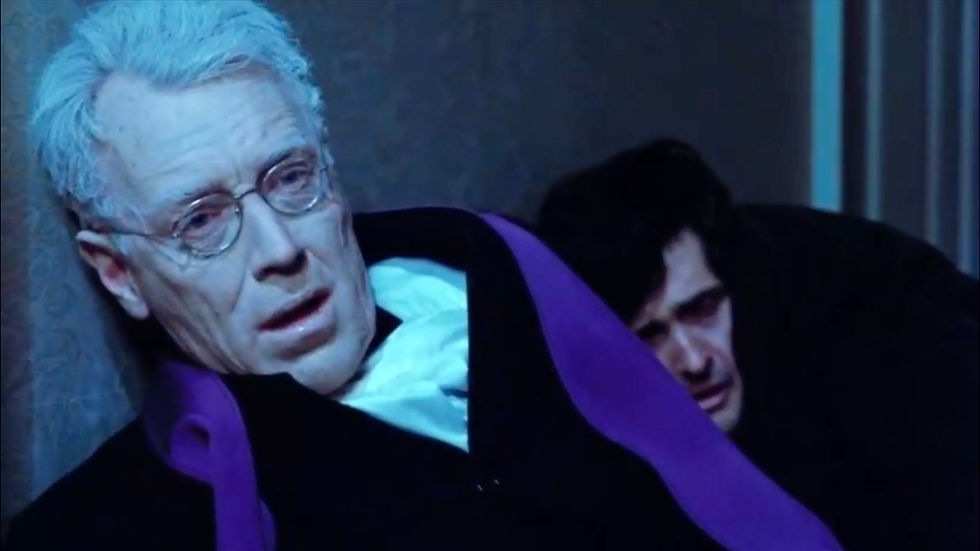

For the role of “Father Lankester Merrin”, the elderly archaeologist and Jesuit priest, Friedkin could think of only one actor endowed with the quiet dignity and nobility he desired: Max von Sydow. Already internationally acclaimed for his collaborations with legendary Swedish director Ingmar Bergman and appearing in Hollywood films since 1965, Sydow proved Friedkin's instincts on point. He reveals the stress, fear, and courage behind “Merrin’s" eyes, yet when confronting the demon, becomes an unshakable pillar of strength, faith, and hope.

It's an electrifying performance, made even more astonishing by the fact that Sydow was only forty-three years old. Although he spent hours in makeup each day to look older, it's his extraordinary acting that convinces us “Merrin” is elderly. From the moment a young boy tells him about a discovery at the archaeological dig, the effort with which he rises and the way he walks instantly communicate the weight of old age. His magnificent performance garnered a Best Supporting Actor Golden Globe nomination. He reprised the role in 1977's “Exorcist II: The Heretic”. Find more about the life and career of the great Max von Sydow in my post on “The Seventh Seal”.


Lee J. Cobb portrays “Lieutenant William F. Kinderman”, the homicide detective investigating the desecration of a church statue and the death of a man outside “Regan’s" window. Cobb delicately conveys both "Kinderman's" loneliness and his keen intelligence. Relying on warmth and humor to disarm those he questions, “Kinderman” tells “Karras" he reminds him of John Garfield before gently probing him, and asks “Chris” for an autograph to flatteringly ensure she'll be willing to speak with him again. His kitchen scene with “Chris” is especially riveting, in which “Kinderman” pretends to be thinking aloud so he can carefully watch her reactions, while she internally begins worrying that her daughter may have committed murder. Far more is going on inside each of them than either wants to show, which Cobb and Burstyn play to perfection, making it a masterclass in screen acting.

Friedkin and Blatty had originally gone to a Los Angeles play to see an actor they were considering for “Kinderman”. Unimpressed, they happened to notice legendary actor Lee J. Cobb seated nearby and instantly realized he'd be perfect. Cobb's screen career began in the 1930s, and by the 1950s he was widely regarded as one of the greatest actors of the American stage and screen. "The Exorcist” came near the end of his prestigious career. Read more about the life and career of the amazing Lee J. Cobb in my posts on "On the Waterfront", "12 Angry Men", and "The Three Faces of Eve”.

Jason Miller plays “Father Damien Karras", a priest who also serves as a psychologist for his fellow clergy. Guilt-ridden and overwhelmed by the world’s darkness, “Karras” is suffering a profound crisis of faith. Miller brilliantly captures his inner turmoil — in the grief beneath a quiet conversation over a beer with another priest, the strength and sensitivity of his exchanges with “Kinderman", the pain and introspection of his prayers, and the humor, compassion, torment, and rage he displays opposite “Regan". His profoundly human portrayal earned him a richly deserved Best Supporting Actor Academy Award nomination.


Born in New York City and raised in Scranton, Pennsylvania, Jason Miller received a Catholic education at the Jesuit University of Scranton, where his first play, “The Winners”, won first prize in the Jesuit Eastern Play Contest. He later earned a master's degree from The Catholic University of America in Washington, D.C., where he met and married fellow drama student Linda Gleason, daughter of actor/comedian Jackie Gleason. After moving to New York in 1966, he supported himself with odd jobs while writing plays and acting. In 1972, his play “That Championship Season” premiered at Joseph Papp's Public Theater before moving to Broadway, earning Miller a Best Play Tony Award, Most Promising Playwright Drama Desk Award, and a Pulitzer Prize.


Friedkin saw “That Championship Season”, thought it was a play about lapsed Catholicism, and was intrigued to learn its playwright was also an actor. They met, and Friedkin mentioned “The Exorcist”. A few days later, after reading “The Exorcist”, Miller called Friedkin and declared, “I am ‘Karras”, explaining that he had studied for three years to become a priest before experiencing his own crisis of faith and leaving the church. Although Stacy Keach had already been cast, Friedkin agreed to screen-test Miller. After seeing the footage, he persuaded Warners to buy out Keach's contract and cast Miller instead. “The Exorcist" was Miller’s film debut, and he went on to appear in twenty-five more film and TV productions, including “The Ninth Configuration”, “The Nickel Ride”, “Rudy", and “The Exorcist III”. He also wrote and directed the 1982 film adaptation of “That Championship Season”. His other plays include "Nobody Hears a Broken Drum", "Lou Gehrig Did Not Die of Cancer”, and "Barrymore's Ghost”.

I remember that two brilliant actor brothers I studied with in Philadelphia decades ago worked with Miller — I can’t remember on what — and always spoke of him as a wonderful man. Married and divorced three times, he had four children, including actors Jason Patric and Joshua John Miller. Jason Miller died of a heart attack in 2001 at the age of 62.
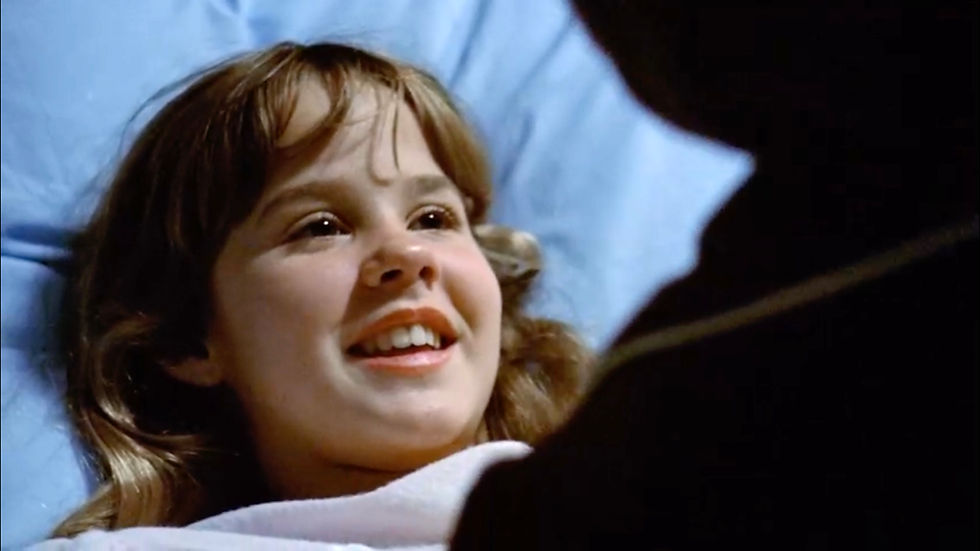
Director Mike Nichols turned down the chance to direct “The Exorcist”, saying, “You’ll never find a twelve-year-old girl to carry the picture”. Well, he hadn't met Linda Blair, whose astonishing performance as “Regan MacNeil” proves him spectacularly wrong. Blair transforms from a sweet, wholesome child into evil incarnate with frightening realism every step of the way. She's completely believable whether happily showing her mother a sculpture she made, talking excitedly about her birthday, or enduring the film's harrowing medical procedures with an agony as horrifying as anything else in the film.

As “Regan’s" possession deepens, Blair's piercing stares and chillingly vacant expressions make the demon terrifyingly real. Her indelibly fearless performance became one of horror's defining icons, with AFI ranking “Regan” the 9th greatest movie villain of all time. It also earned Blair a Best Supporting Actress Academy Award nomination, a Golden Globe win, international stardom, and an immortal place in cinema history.

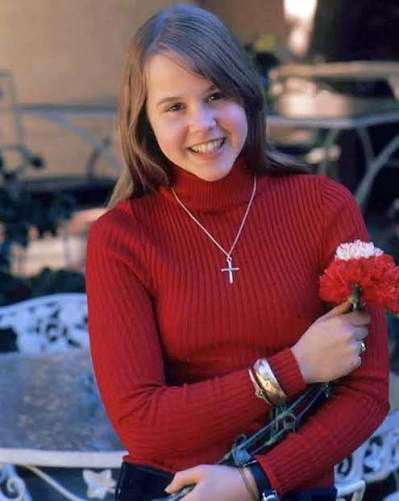
Missouri-born Linda Blair moved with her family to Connecticut at age two. With her mother as her manager, she began modeling at age four, appeared in her first national commercial at five, and by twelve had appeared in more than seventy-five commercials and hundreds of catalogs. With her earnings, she bought her first pony at ten and became an accomplished rider, trainer, and multiple blue-ribbon-winning horse-show competitor. Tired of acting and modeling, Blair told her mother she wanted to quit. Two weeks later came "The Exorcist”. Friedkin claimed to have seen more than a thousand girls between the ages of eleven and thirteen before choosing Blair because, as he put it, “She was smart but not precocious. Cute but not beautiful. A normal, happy twelve-year-old girl”. Blair didn't fully understand everything her character said or did, especially why “Regan” had to become a monster, but she trusted Friedkin's meticulous direction, later saying the film worked because he knew exactly what he wanted. She spent three hours each day in makeup and another having it removed, endured subzero temperatures, mechanical rigs, and painful contact lenses that required numbing drops before being inserted.


When “The Exorcist” was released, Blair's life changed overnight. People stopped and stared at her in public, some fearing she was still possessed, others questioning her sanity. False rumors circulated that she had mental problems, and death threats became so serious that Warners hired police officers to guard her home for six months. On the positive side, her newfound fame led to a role in the hit disaster film “Airport 1975” and starring roles in several important television movies, including “Born Innocent”, “Sarah T. – Portrait of a Teenage Alcoholic”, “Sweet Hostage”, and “Victory at Entebbe”. She also appeared in “Exorcist II: The Heretic”.


In 1977, Blair was arrested for cocaine possession for which she received three years probation, was fined $5,000, and had to make public anti-drug appearances. The incident effectively ended her A-list career, and she spent much of the rest of her screen time in lower-budget films. Continuing in movies, TV, and stage (including playing “Rizzo” in the 1994 Broadway revival of “Grease”), she’s amassed nearly eighty screen credits, including “Roller Boogie”, “Hell Night”, “Savage Streets”, “Chained Heat”, “Witchery”, “An Affair of the Heart”, the 1990 “Exorcist” spoof “Repossessed”, 2023's "The Exorcist: Believer”, and hosted several seasons of the reality TV show, "Scariest Places on Earth”. A lover of animals, the theft of her dog in 1984 helped prompt her to become a passionate animal-rights advocate. In 2004, she founded the Linda Blair WorldHeart Foundation to rescue, rehabilitate, and rehome abused, neglected, and abandoned animals. Though never married, she’s been romantically linked to singer Rick Springfield and musicians Glenn Hughes, Neil Giraldo, and Tommy Shaw, among others. As of this writing, Linda Blair is 67 years old.


A final mention must be made of Mercedes McCambridge, who provides the spine-chilling voice of the demon. During filming, Blair delivered all of “Regan’s” dialogue, with McCambridge later dubbing only the lines spoken by the demon. To make her voice more disturbingly harsh, McCambridge swallowed raw eggs, drank whiskey and smoked. As she told the New York Times in 1974: “Doing that sound track was a terrible experience. I didn't just do the voice, I did all of the demon's sounds. That wheezing, for instance. My chronic bronchitis helped with that. I did it on one microphone, then on another, elevating it a bit, then a third and fourth, two tones higher each time, and they combined them, as a chorus. The wailing just before the Demon is driven out, that's the keening sound I once heard at a wake in Ireland. I used moaning cries I had used when playing ‘Lady Macbeth’ for Orson [Welles]. For the groaning sounds, I pulled a scarf around my neck, tight, and almost strangled". Originally not credited onscreen for her work in “The Exorcist”, McCambridge successfully fought to receive screen credit. You can read more about the life and career of Mercedes McCambridge in my post on “Giant".

Another phenomenon "The Exorcist" helped create was Mike Oldfield's song "Tubular Bells". Friedkin originally hired composer Lalo Schifrin but fired him after hearing his score. Friedkin then discovered an advance copy of Oldfield's debut album and chose its haunting title track for the film. Used sparingly onscreen and more prominently in the film's marketing, it helped "Tubular Bells" sell an estimated 15 million copies worldwide. As Virgin Records' very first release, the album helped establish the label as a major force in the music industry. The song won a Grammy Award, and through its association with "The Exorcist", became one of the most iconic and influential horror themes ever.

Besides censored versions for TV and some international markets, “The Exorcist” exists in two primary versions: the original 1973 theatrical release; and the 2000 Director's Cut (also titled “The Version You've Never Seen”). The latter restores about twelve minutes of previously unseen footage, including additional opening shots of the "MacNeil" house and the church statue, “Regan’s" infamous stair descent, an extra scene between “Chris” and “Dr. Klein”, “Karras” analyzing “Regan’s" voice in a language lab, two additional conversations between “Chris” and “Merrin”, and an extended ending. Both versions are excellent, though I personally prefer the Director's Cut.

In addition to Oscar wins for Best Screenplay and Sound, and nominations for Best Picture, Director, Actress, Supporting Actress, Supporting Actor, and Cinematography, "The Exorcist" was also nominated for Best Art Direction-Set Decoration (Bill Malley and Jerry Wunderlich), and Best Film Editing Oscars (Jordan Leondopoulos, Bud S. Smith, Evan A. Lottman, and Norman Gay).

The popularity of "The Exorcist" spawned sequels and prequels, including: 1977's “Exorcist II: The Heretic” (with Blair); 1990's “The Exorcist III” (with Miller, written and directed by Blatty); 2004's “Exorcist: The Beginning” and its alternate version 2005's “Dominion: Prequel to The Exorcist”; and 2023's "The Exorcist: Believer" (with Burstyn and Blair.) A film titled “The Exorcist: Martyrs” is due out in early 2027. Starting in 2016, a TV series, "The Exorcist", ran for two seasons. A stage version (which I saw) premiered in 2012 in Los Angeles, followed by an official stage adaptation in the UK and Ireland beginning in 2016. A stage musical parody, "Exorcistic: The Rock Musical ", began in Los Angeles in 2013.

This week’s iconic film combines first-rate filmmaking, unforgettable performances, profound human drama, and terrifying realism in one genuinely frightening movie that’s not to be missed. Enjoy “The Exorcist”!
This blog is a series exploring classic films from the silent era through the 1970s. Each post recommends a film to watch, aiming to entertain, inform, and deepen your appreciation of cinema — its stars, directors, writers, the studio system, and more. Be sure to visit the HOME page to learn more, and check out THE MOVIES page for a full list of films. Please comment, share with others, and subscribe so you never miss a post. Thanks for reading!
YOU CAN STREAM OR BUY THE FILM ON AMAZON
OTHER PLACES YOU CAN BUY THE FILM:
As an Amazon Associate I earn from qualifying purchases, and any and all money will go towards the fees for this blog. Thanks!!


Comments