


192. THE SEA WOLF, 1941
A towering Hollywood triumph of storytelling and suspense

The year is 1900. Along San Francisco’s Barbary Coast, a fugitive named “George Leach” flees through the night fog and ducks into a saloon crawling with cutthroats, drunks, and other unsavory characters. He overhears a sailor being offered good money to work aboard a seal-hunting schooner named the Ghost., to which the sailor responds: “I wouldn’t sail on a ship like the Ghost if she was the only sailing vessel left on the Pacific Ocean”. Broke, on the run, and out of options, “Leach” takes the job.

Escorted by rowboat through the black water to the Ghost, “Leach” gets an even darker warning from a drunken fellow passenger named “Cooky” before reaching the ship: “You’ll have a lovely time aboard the Ghost. At night you’ll go to sleep praying for the morning, and during the day you’ll pray for the night. But there’s one thing you’ll pray for most of all — to tear out, with your own fingers, the cold, merciless heart of ‘Wolf Larson’” (the captain of the Ghost).

"Leach" is not the only one bound for the Ghost. Two unfortunate castaways also find themselves trapped onboard: “Ruth Webster,” a mysterious woman fleeing her past; and “Humphrey Van Weyden”, an idealistic novelist hopelessly unprepared for the ferocious world he’s about to enter. For everyone aboard — including us — there's now no escape from the dark, nightmarish world of “The Sea Wolf”.

What begins as a heart-pounding adventure becomes a harrowing battle for humanity against the iron-fisted, totalitarian rule of “Captain Wolf Larsen”, whose credo (lifted from John Milton’s “Paradise Lost”) is: “Better to reign in Hell than to serve in Heaven”. With cruelty, unconventional romance, demoralization, flashes of hope, and no escape route, “The Sea Wolf” becomes a powerhouse psychological odyssey of lost souls struggling for dignity and respect amidst fear and brutality.

While exploring the lust for power and the darkest corners of human nature, the film rises far beyond a standard adventure story with its rich, unsettling philosophical depth. Thrilling, intelligent, and often chilling, it delivers excitement with real substance — the kind of film that grips you while leaving something lingering long after the final scene. Decades later, it remains every bit as powerful and resonant. One of the rare films to hold a perfect 100% rating on Rotten Tomatoes, it more than earns that distinction. I absolutely love this film.

“The Sea Wolf” also stands as a showcase of the Hollywood Studio Era at its peak. For all its flaws, that era was cinema’s true heyday — when the major Hollywood studios ruled the industry, producing hundreds of films a year with assembly-line efficiency and employing tens of thousands of contracted workers across every department, all sharpening their craft by turning out movie after movie. When the right team met the right material, the result was magic — and that’s exactly what happened with this somewhat forgotten, stunning movie.

Not conceived as a sweeping epic or prestige picture, “The Sea Wolf” was made by Warner Brothers as just another hopeful moneymaker — one of thirty-seven features the studio released that year (and one of their most profitable). Based on Jack London’s 1904 novel The Sea-Wolf, the project first began at Warners in 1938 as a vehicle for their major star Paul Muni, with studio contract director Mervyn LeRoy attached to direct. That plan fell through, and about two years later, when both Muni and LeRoy were no longer under contract, head of production Hal B. Wallis revived the project and produced it as a vehicle for Warner star Edward G. Robinson.


The film was in exceptionally good hands, for Wallis was one of Hollywood’s legendary producers. Chicago-born, he began in Los Angeles as a theater manager before rising rapidly at Warners, moving from head of publicity to head of production — a position he held from 1933 to 1944 where he helped shape many of the defining films of Hollywood’s Golden Age. He left Warners shortly after producing “Casablanca”, when studio head Jack L. Warner famously rushed to the stage to accept the film’s Best Picture Oscar as if he, not Wallis, had produced it, prompting Wallis to launch his own highly successful production company. In a career ending in 1975, Wallis produced or executive-produced more than 380 films, including classics like “The Maltese Falcon”, “Little Caesar”, “The Adventures of Robin Hood”, “Sergeant York”, “High Sierra”, “Now, Voyager”, “True Grit”, numerous films starring Elvis Presley, Dean Martin, and Jerry Lewis, and others. His films received nineteen Best Picture Oscar nominations, and he was twice honored with the Irving G. Thalberg Memorial Award for sustained excellence in production. He discovered or developed stars that include Humphrey Bogart, Bette Davis, Errol Flynn, Edward G. Robinson, Kirk Douglas, Burt Lancaster, and Charlton Heston. He was married twice, to actresses Louise Fazenda and Martha Hyer. Hall B. Wallis died in 1986 at the age of 87.

Wallis’ instincts were spot-on once again when he chose Warner’s screenwriter Robert Rossen to adapt London’s The Sea-Wolf for the screen, for Rossen delivered far more than a straightforward adaptation. In keeping with the studio’s gritty, socially conscious style, he drew deeply from the harsh realities of the times. With Adolf Hitler’s fascism tightening its grip on Europe, Rossen subtly reshaped London’s story into a pointed allegory of tyranny and unchecked power. Though the studio softened some of the sharper political edges, the screenplay explores universal truths about the darker side of human nature, keeping the film exciting, thought-provoking, and wholly relevant - even today.
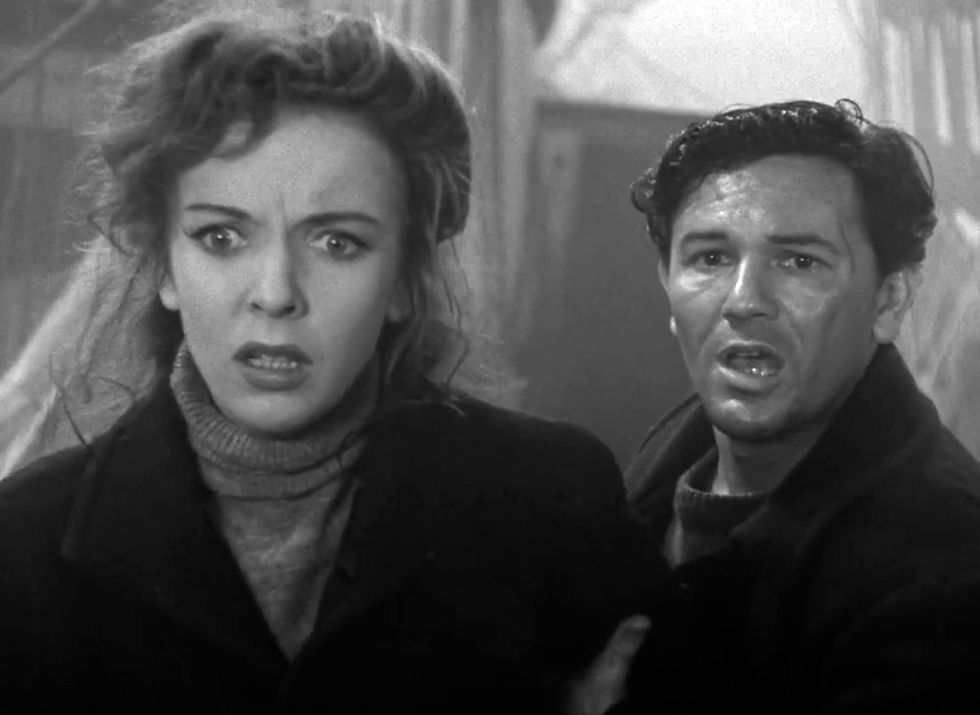
The themes that make “The Sea Wolf” so powerful would come to define Rossen’s career. In addition to writing screenplays, by 1945 he expanded into directing, and by 1947 was producing as well. In his work, he became known for exploring the corrupting lure of power, ambition, and moral compromise, helping pioneer a brand of film noir known as film gris (“gray film”) — darker, more realistic, and more overtly political than classic noir, often placing the cause of crime and corruption on society itself. You can see those ideas already taking shape here.


Born in New York City, Robert Rossen began as a theater stage manager and director before joining Warners where he co-wrote his first screenplay for the 1937 film “Marked Woman”. He remained at Warners until a 1945 falling-out with Jack Warner, then worked briefly with Wallis before forming his own company in 1949. A former member of the Communist Party USA, Rossen was blacklisted in 1953 during the McCarthy era for refusing to name others before the House Un-American Activities Committee (HUAC) (see my post on “High Noon” for more on HUAC — just click on the film title to open it). Despondent and ill from being unable to work, he provided names to HUAC in 1953, allowing his career to resume. In less than thirty years, Rossen wrote twenty-eight films, directed ten, guided eight actors to Oscar nominations (with two wins), and produced six films. He earned Academy Award nominations for writing and directing “All the King's Men”, and Best Picture, Director, and Screenplay nominations for “The Hustler”. His other writing credits include “The Roaring Twenties”, “The Strange Love of Martha Ivers”, and “Billy Budd”, and his directing work also includes “Body and Soul”, “Alexander the Great”, and “Lilith". Married once until his death, Robert Rossen died in 1966 at the age of 57.

Wallis struck gold yet again when he assigned Warner contract director Michael Curtiz to helm “The Sea Wolf”, for few filmmakers understood cinematic technique better. The opening shot alone showcases Curtiz’s brilliance. The camera drifts along a foggy cobblestone street, passing gas lamps and storefronts as a horse-drawn carriage glides by with laughing, carefree passengers. Then a shadowy figure rushes into frame, pursued by a policeman. As the fog briefly parts, the camera pauses just long enough to catch the officer blowing his whistle to summon reinforcements. In this single shot, Curtiz turns a simple chase into an urgent, uneasy jolt of tension that immediately pulls us in. The atmosphere he creates here sets the relentless tone that carries the entire film. If that's not screen artistry at its finest, I don't know what is.

Curtiz could turn the mundane electric, as he does in the kitchen scene where “Cooky” reads “Van Weyden’s” notes. The camera glides past “Van Weyden” through kitchen clutter before settling on “Cooky” at one side of the frame with steam billowing from a pot on the other. Even before the action begins, the composition is telling a story. What follows is a dynamic interplay of close-ups, medium shots, and two-shots with subtle camera moves to track the men as they fight, while light and shadows ripple across the set, evoking the constant sway of a ship at sea. It's exhilarating entertainment.


One of those rare filmmakers whose movies are more famous than he is, Michael Curtiz directed some of the most famous films ever made, yet his own stature is often overlooked. Born in Hungary, he made more than sixty silent films in Europe before joining Warners in 1926, where he became one of the key creative forces behind the studio’s rise to the top. For twenty-eight years, he worked as a Warner's house director, taking on whatever the studio assigned him — prestige pictures, routine programmers, masterpieces, and flops alike. He directed nearly 180 films across every genre, constantly adapting his style to the needs of the story rather than imposing a recognizable personal stamp. Ironically, that versatility and high productivity may be exactly what kept his brilliance from being recognized. Yet on closer look, his talent is unmistakable — striking compositions, fluid camera movement, inventive lighting, and dynamic staging that immerse the audience in the drama rather than his own work. He also had a remarkable gift with actors, guiding ten to Oscar nominations (with two wins). “The Sea Wolf” is a glowing example of his spellbinding ease with every element of cinematic storytelling — a mastery few filmmakers have ever matched. For more on the life and career of Michael Curtiz, see my earlier posts on “Captain Blood”, “Casablanca”, “The Adventures of Robin Hood”, and particularly “Mildred Pierce”.

A director never works alone, and alongside Curtiz, cinematographer Sol Polito plays a vital role in bringing “The Sea Wolf” to life. Through lighting, lens choices, and camera movement, he shapes the film’s mood and gives it the feel of one continuous, mysterious, nightmarish journey. His lighting is extraordinary — looming shadows build tension, drifting light suggests motion, and faces are repeatedly brushed by darkness, creating a deeply claustrophobic unease. His striking use of the studio’s newly installed fog machine turns the air itself into an unsettling presence, obscuring both people and objects. With Curtiz’s direction, Polito’s visual execution makes “The Sea Wolf” a triumph in cinematic atmosphere.


Born in Palermo, Italy, Sol Polito moved to New York City at about age eleven and entered film through still photography, laboratory work, and camera assisting before shooting his first film, 1914 ’s “Rip Van Winkle”. He rose to become one of Warner’s top cinematographers, photographing many of the studio’s most important productions. He collaborated with Curtiz on sixteen films, and though Curtiz was infamously demanding, the two shared an exceptional visual rapport. As film historian Alan K. Rode wrote in Michael Curtiz: A Life in Film: “Polito had become Curtiz’s visual doppelgänger… So attuned were they to each other, they often communicated with nods, grunts, or glances”. Across a career spanning 168 films, Polito earned three Academy Award nominations (“The Private Lives of Elizabeth and Essex”, “Sergeant York”, “Captains of the Clouds”) and helped create some of cinema’s most memorable images in classics like “I Am a Fugitive from a Chain Gang”, “42nd Street”, “Gold Diggers of 1933”, “The Adventures of Robin Hood”, “Angels with Dirty Faces”, “The Sea Hawk”, “Now, Voyager", “Arsenic and Old Lace”, “Sorry, Wrong Number”, and his final, 1949’s “Anna Lucasta”. Married once, he was also the father of cinematographer Gene Polito. Sol Polito died in 1960 at the age of 67.

If any one of the collaborators mentioned above had been missing, “The Sea Wolf” would not be the masterpiece it is. The same is true for its phenomenal cast, especially Edward G. Robinson as “Wolf Larsen”. Robinson brings extraordinary life to Rossen’s writing, transforming what might have been a purely sadistic egotist into something far more layered — a man turned monstrous by wounds that never healed. His chilling portrayal is one of the film’s greatest strengths, making the film’s dark ideas feel frighteningly real. In his autobiography All My Yesterdays, Robinson recalled reading and loving London’s novel when he was barely twelve, thinking “Larsen” “a wonderful character”, adding “and that’s how I played him, decades later”.

Robinson's “Larsen” is terrifying precisely because he's so human. He fills "Larsen" with layers of contradictions — stoic yet unexpectedly open when listening to another’s suffering, shifting to amused cruelty or cutting sarcasm as he humiliates them. This complexity is in full display in his first scene with “Van Weyden” in the captain’s quarters. There, “Larsen” reveals his intelligence, culture, literary passion, and fierce dominance as he declares: “My strength justifies me... The fact that I can kill you or let you live as I choose, the fact that I control the destinies of all onboard the ship, the fact that it's my will and my will alone that rules here — that's justification enough”. Yet just as “Van Weyden” turns to leave, Robinson lets a flash of desperate loneliness surface as “Larsen” implores, “Don’t go... Been a long time since I talked like this to anyone”. Frightening, deeply moving, and unforgettable, it's one of cinema’s great performances.

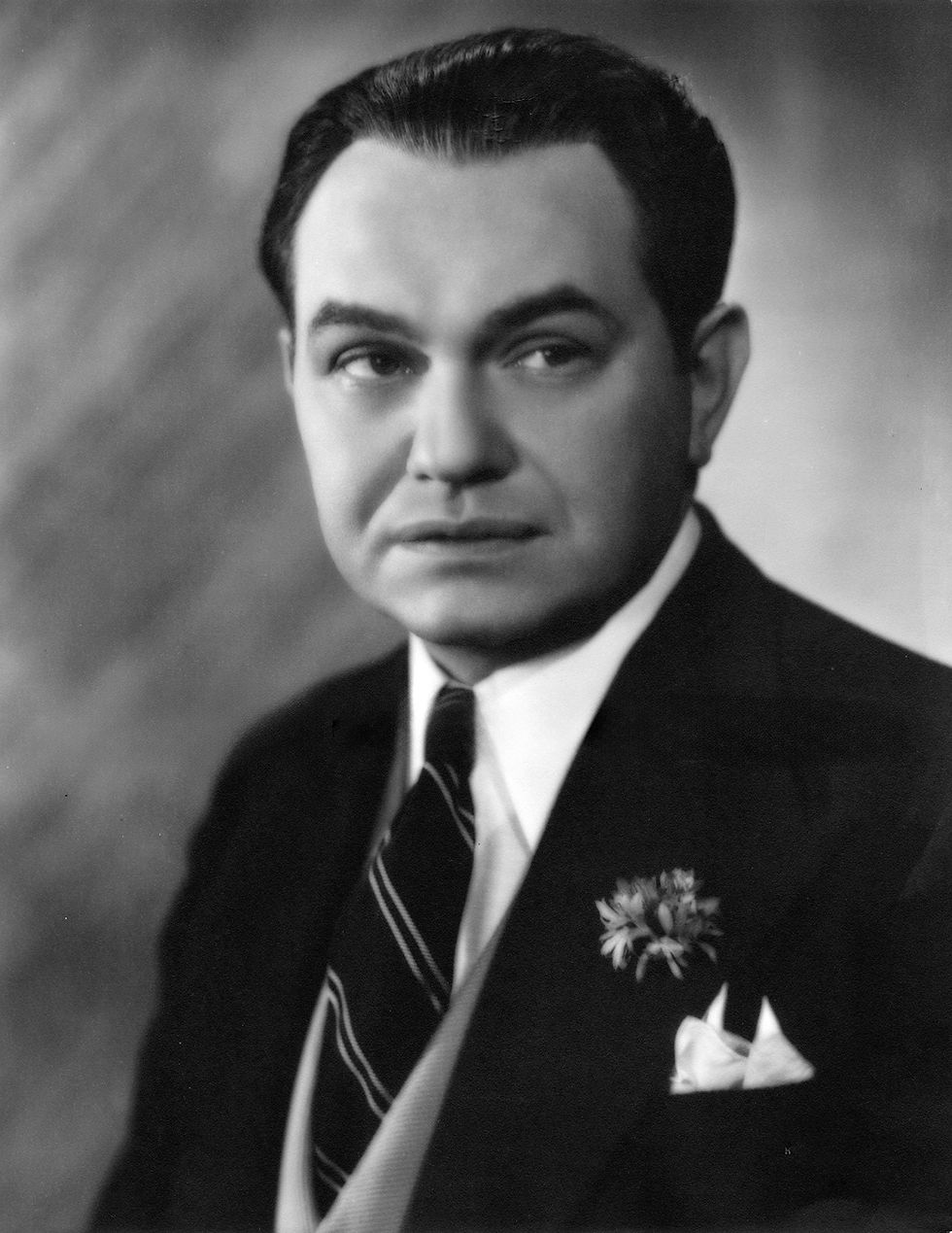
With his tenth film, Edward G. Robinson shot to stardom in the title role in “Little Caesar” (produced by Wallis), a landmark film that helped define the gangster genre. His electrifying performance as a ruthless, egocentric criminal fixed him in the public imagination as a tough-talking gangster, though his immense talent always brought surprising depth to even the meanest roles. By the 1940s, he began breaking away from that mold with more varied leading and supporting parts, even when many of his characters still revolved around crime or corruption. Offscreen, Robinson was an outspoken critic of fascism and Nazism, notably starring in “Confessions of a Nazi Spy”, Hollywood’s first explicitly anti-Nazi film. He was thrilled to play “Larsen”, writing in All My Yesterdays: “No actor could ask for more… the character I played, the famous ‘Wolf Larsen', was a Nazi in everything but name”.


But Robinson’s outspoken politics would later carry painful consequences. As conservative forces and isolationists took over during the McCarthy era, their focus of attack was primarily against liberals, leftists, Jews, homosexuals, and other minorities, and Robinson, who was a liberal Jew, was called before HUAC to defend himself against Communist accusations. Though cleared of deliberate Communist ties, he refused to name names, and to protect himself, distanced himself from several liberal and left-leaning organizations. But that wasn’t enough — just being interrogated placed him on Hollywood’s “graylist”, limiting him to work solely in smaller, minor productions, since major studios wouldn’t touch him. His experience was emblematic of what many innocent artists went through at the time, with devastating professional and personal consequences. One of the luckier ones, Robinson returned to top-tier status when Cecil B. DeMille cast him in “The Ten Commandments” in 1956. Over the course of his career, Robinson appeared in nearly 120 films and TV shows. Read more about this iconic actor in my earlier post on “Double Indemnity”.


The performances in “The Sea Wolf” mesmerize because of the rich inner lives the actors bring to them, and that's certainly true of Ida Lupino as “Ruth Webster”, the only woman aboard the Ghost. We meet her alongside “Van Weyden”, and Lupino immediately shows a nervous energy tinged with sadness and defensiveness, hinting that there is far more to “Ruth" than meets the eye. She quickly proves herself a fiery gal who, despite deep vulnerability, refuses to be broken, and Lupino infuses her with hints of desperation and genuine hopelessness. Particularly striking is the way her hard exterior begins to slowly soften as hope and feelings for "Leach" begin to emerge when he tells her she can stop crying. Later, the layered emotions she conveys while speaking to him through the locked door are also touching. It's a fine and convincing performance of a woman wounded by life yet still struggling to move forward.
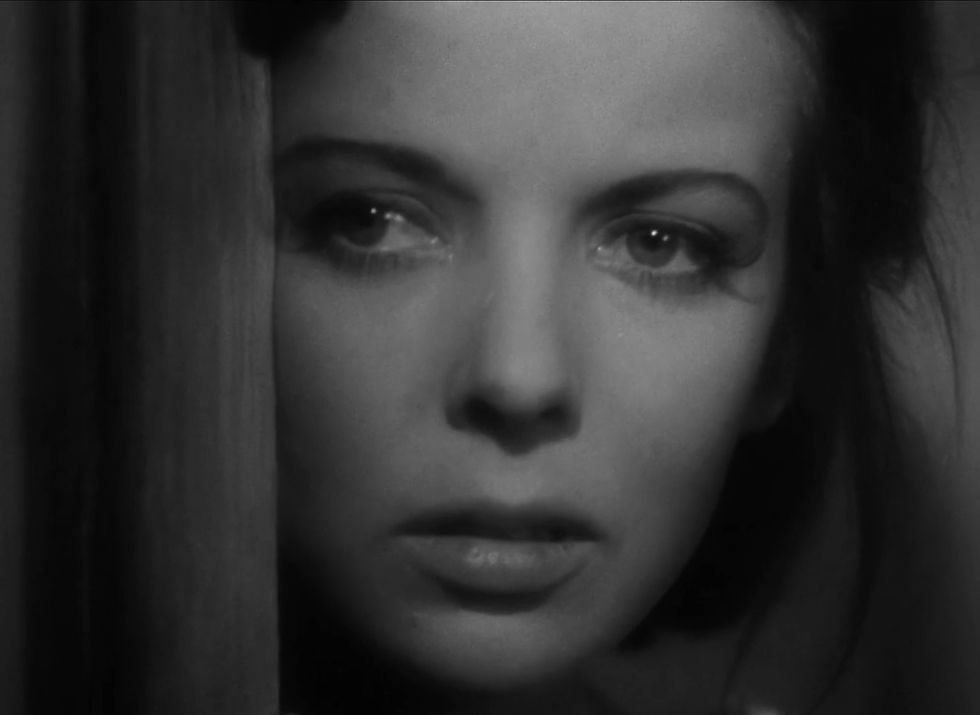

London-born Ida Lupino began her Hollywood career at Paramount Pictures in 1934, followed by a brief period at Columbia, and after eighteen starring or co-starring roles, she was dissatisfied with her roles and the direction of her career. Everything changed when she moved to Warner Brothers with the 1940 film noir, “They Drive by Night”. Her second Warner film, 1941's “High Sierra”, made her a star, and “The Sea Wolf” quickly followed. Her portrayal of “Ruth” is a perfect example of the hard-edged, intense yet vulnerable women she came to define in the 1940s. By all accounts, making this film was far from pleasant for her. She clashed with Curtiz, who dismissed her suggestions, and also had to contend with late, last-minute script changes.

Though Lupino continued to deliver first-rate performances, she remained unhappy with the roles Warners assigned her, wryly calling herself the “poor man’s Bette Davis”, as she was often offered parts Davis had rejected (Davis was Warner’s top female star). When Lupino’s contract ended in 1947, she left Warners, freelanced briefly, and then made a bold and pioneering decision to step behind the camera as a writer, director, and producer while continuing to act — an extraordinary move for anyone at the time, especially a woman. Find more about her life and trailblazing career in my post on “The Bigamist", which she both starred in and directed.

The third star of “The Sea Wolf” is John Garfield as “George Leach”, the desperate yet hopeful man trapped in a world of tyranny. At heart, “Leach” is a good guy with a short fuse and a quick instinct to act, and Garfield brings him to life with simmering restlessness, restrained anger, and striking vulnerability, creating a character who feels fully lived in.

Garfield's gift for conveying complex emotion is evident from his very first scene in the 8 Bells bar, from the defiant strength with which he reacts to a pickpocket at the door, the sensitive way his eyes search the room moments later, his wide-eyed response to overhearing a sailor being offered a job, and his violent outburst after being slipped a mickey in his drink. Equally memorable is the fearless way he continually stands up to “Larsen” and the heartbreakingly tender scene in which he speaks to “Ruth” through the locked storeroom door. It's thought that Garfield was the first actor to portray a humane antihero, which this performance helps confirm.

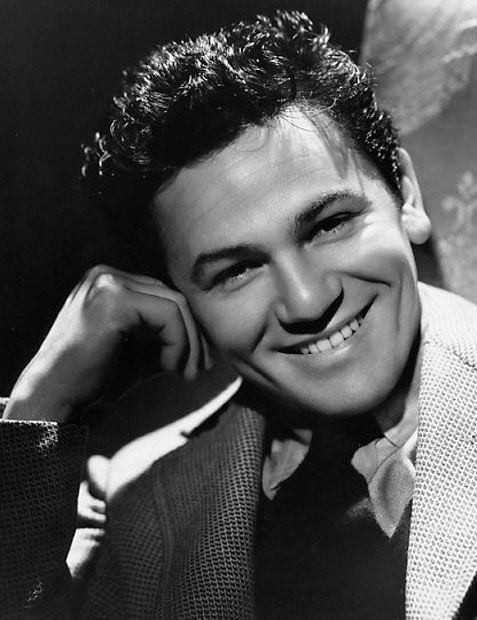
An actor far ahead of his time, John Garfield brought an effortless naturalism to the screen. His words, emotions, and movements appear to spontaneously arise from his soul, giving his characters a palpable inner life and making them seem startlingly real. As such, he became a key figure in shifting screen acting away from stylization toward something closer to lived human experience. Audiences first saw these qualities in his Hollywood debut as a cynical, brooding outsider in 1938’s “Four Daughters”, directed by Curtiz. The performance earned him an Academy Award nomination and made him an instant star. His tough yet vulnerable streetwise presence led Warners to pigeonhole him in variations of gangsters, criminals, and other hard-edged guys, as the studio tried to position him as their next James Cagney or Edward G. Robinson — something Garfield deeply resented. He accepted the supporting role in “The Sea Wolf” because it was meaty, featured a great cast, and reunited him with Curtiz, whom he considered his lucky charm. Garfield was also close friends with Rossen, who tailored the script for him, even shifting "Ruth's" romance from “Van Weyden” to “Leach”.


Though never a member of the Communist Party, Garfield — like Rossen and Robinson — was a liberal Jewish actor and thus became a target during the McCarthy witch hunts. It's widely believed Hollywood figures were targeted by HUAC in large part for the publicity their names generated, with Garfield a prime example. Falsely accused of communist ties, he was called to testify twice before HUAC. The strain of the accusations proved too much for his weak heart, and he died in 1952, in the midst of the turmoil, at just 39. In All My Yesterdays, Robinson wrote: “John Garfield was one of the best young actors I ever encountered, but his passions about the world were so intense that I feared any day he would have a heart attack. It was not long before he did”. Be sure to read more about the life and career of the great John Garfield in my posts on “Gentleman’s Agreement” and “The Postman Always Rings Twice”.


Yet another reason “The Sea Wolf” works so well is Alexander Knox’s performance as “Humphrey Van Weyden”, the soft-spoken intellectual writer who, by a twist of fate, finds himself cabin boy on the Ghost. In stark contrast to the motley crew, the cultured and deeply ethical “Van Weyden” serves as the film’s moral heart, trying to stay afloat in a decaying world of villainy. He is the only person on the ship with an innate sense of dignity — something “Larsen" is determined to break. This clash between the honorable, civilized man and the brutal, authoritarian captain provides much of the film’s drama and depth, and Knox plays it exquisitely, especially in the cabin scene where he first begins to psychologically analyze “Larsen” with a quiet yet unshakable strength that stands up to the captain’s bullying violence. His performance remains low-key yet richly nuanced, whether in his composed integrity upon meeting “Ruth”, in urging “Leach” and “Johnson" to make their escape, or when reminding “Larsen” that “there’s a certain price that no man wants to pay for living”. Though billed as a supporting player, the role is truly a lead, and Knox excels in it.


Canadian-born Alexander Knox began acting onstage in college before moving to Boston to join a theater company. He soon relocated to London, where he worked alongside stage legends Laurence Olivier and Ralph Richardson while appearing in several films during the 1930s, including a small part in Alexander Korda’s “Rembrandt”. In the 1940s, he appeared on Broadway, beginning with the 1940 production of “Romeo and Juliet” starring Olivier and Vivien Leigh, which brought him to Hollywood’s attention and led to his first Hollywood film, “The Sea Wolf”. More major roles followed, including starring parts in “None Shall Escape”, “Sister Kenny”, “Tokyo Joe”, and the title role as Woodrow Wilson in 1944’s “Wilson”, which earned him a Best Actor Academy Award nomination and a Golden Globe statue. Not a communist, like many others of the period, Knox had ties to several liberal and left-leaning causes, making him a target of HUAC. In 1952, he was blacklisted, effectively ending his rising Hollywood career.

Knox then went to Europe to co-star opposite Ingrid Bergman in “Europe ’51”, before settling in London, where he continued working in film, TV, and theater while also writing plays, screenplays, and novels. His more than ninety screen credits include “The Damned”, “The Vikings”, “The Longest Day”, “The 25th Hour”, “You Only Live Twice”, and “Tinker Tailor Soldier Spy”. He was married once, to actress Doris Nolan (whom watchers of the films on this blog will know as Katharine Hepburn’s sister in “Holiday”), and together they had one child, actor Andrew Knox. Alexander Knox died in 1995 at the age of eighty-eight.


As I previously noted, the greatness of “The Sea Wolf” lies in the remarkable fusion of so many talents, each contributing something essential to its power, and two more actors deserve special mention for the richness they bring to the film. First is Gene Lockhart, who is outstanding as “Louis J. Prescott”, the ship’s doctor. Once a successful and respectable physician, life aboard the Ghost has reduced him to a drunkard with trembling hands who has yet to cure a single patient. Lockhart is deeply moving as a man desperately trying to reclaim his dignity and self-respect, revealing how an atmosphere of repression, hatred, and paranoia can tear a person’s soul apart. He has many touching moments, especially his dinner-table plea about the man he once was and the crushing scene in which he is laughed at. “The Sea Wolf” arrived roughly in the middle of Lockhart’s long and prolific career, and you can read more about him in my previous posts on “His Girl Friday”, “Leave Her to Heaven”, and “Miracle on 34th Street”.

Last but not least is Barry Fitzgerald, who gives a knockout performance as “Cooky”, the schooner’s cook and stool pigeon. A cunning man who thrives in the ship’s atmosphere of oppression, “Cooky” is, in his own way, every bit as evil as “Larsen”. Fitzgerald paints this treacherous figure with a light touch, giving him a smiling face, a cackling laugh, and a gleeful taste for provocation — all of which can shift into something horribly menacing in an instant. The way he talks about “Ruth” is skin-crawling, and his scene in the galley, reading “Van Weyden’s” notes, is spectacularly acted. It's another of the film’s standout performances, and will make you understand why Fitzgerald soon became one of the few Hollywood character actors to become a movie star.


Dublin, Ireland-born, Barry Fitzgerald began as a junior executive in Ireland’s Unemployment Insurance Division, but decided to follow his younger brother Arthur Shields into acting, and joined the prestigious Abbey Theatre company in 1915. By day he worked in civil service, by night he acted onstage to great acclaim. Sharing an apartment with writer Seán O'Casey, Fitzgerald starred in O’Casey’s “Juno and the Paycock”, reprising the role in Alfred Hitchcock’s 1930 film version (Fitzgerald’s second film), after which he left his day job to act full-time. While touring with the Abbey Theatre, he came to the United States in 1932 and later returned for John Ford’s “The Plough and the Stars”, one of five films he made with Ford. Over the next four decades, Fitzgerald built a distinguished stage, film, and TV career across Hollywood, New York, London, and Dublin, appearing in roughly fifty screen productions, including “Bringing Up Baby”, “The Long Voyage Home”, “How Green Was My Valley”, “The Picture of Dorian Gray”, “The Quiet Man”, and “The Catered Affair”.

Most famously, Fitzgerald played “Father Fitzgibbon” in the Best Picture Oscar winner “Going My Way”, becoming the first and only performer to date in Academy Awards history to receive two Oscar nominations for the same role, for Best Actor and Best Supporting Actor, winning the latter. A lifelong bachelor, Fitzgerald shared an apartment in Hollywood with his stand-in, Angus D. Taillon. His brother Arthur also enjoyed a prolific career, appearing in about one hundred films, several alongside Fitzgerald. Barry Fitzgerald died in 1961 at the age of 72.


The technical aspects of “The Sea Wolf” are fantastic across the board, made all the more remarkable when you remember that the film was shot almost entirely on a soundstage, including a 150-foot, three-masted schooner set mounted on a rocking mechanism to simulate the movement of the sea. Cinematographer and special effects artist Byron Haskin and sound engineer Nathan Levinson, who together earned the film its only Academy Award nomination for Best Special Effects, use these innovations (along with a special gyro camera designed by Polito) to make it genuinely feel as though we are aboard a ship in open water.

Add to this Erich Wolfgang Korngold’s dark, moody score, which deepens both atmosphere and emotion, and the film becomes a stunning example of studio craftsmanship at its peak. In many ways, “The Sea Wolf” feels like a perfect movie. Remarkably, this was the fifth screen adaptation of London’s novel, with previous versions made in 1907, 1913, 1920, 1926, and 1930 . Though I haven’t seen the others, by virtually all accounts, this one is the best.

Get ready for hard-driving adventure and drama à la Hollywood’s glorious Golden Age. Enjoy the riveting “The Sea Wolf”!
This blog is a series exploring classic films from the silent era through the 1970s. Each post recommends a film to watch, aiming to entertain, inform, and deepen your appreciation of cinema — its stars, directors, writers, the studio system, and more. Be sure to visit the HOME page to learn more, and check out THE MOVIES page for a full list of films. Please comment, share with others, and subscribe so you never miss a post. Thanks for reading!
YOU CAN STREAM OR BUY THE FILM ON AMAZON
OTHER PLACES YOU CAN BUY THE FILM:
As an Amazon Associate I earn from qualifying purchases, and any and all money will go towards the fees for this blog. Thanks!!


Wow!It's one of those films that reminds me why classic cinema is so good and timeless! It is an interesting reflexion about power, loneliness, ambition, desperation...
Edward G. Robinson gives a great performance. He is a Brute but there's also a sadness and complexity beneath the surface that makes you feels sympathy for him (at times), I also likes the cinematography, how well informed you get by frame choices and camera movements and also how different and well played the different characters are.
It makes sense the political environment around the movie, Thank you Jay for another great movie!
Hi Jay,
I watched this movie the night I received your email about it. Wow, really enjoyed it. Very easy to see why this is such a great movie. Great performances by all, especially by Edward G. Robinson and Barry Fitzgerald. Thanks, like usual, for the great post and letting us know about some of those great movies out there.
Best Always,
Stuart
What a wonderful article about such an unforgettable film. I remember watching it as a child, dubbed in Spanish, and being both fascinated and slightly confused by it at the time. What has always stayed with me, though, is the atmosphere... the fog, the eerie Captain, and the haunting feeling throughout the movie.
Reading your piece really made me want to revisit it after all these years. Thank you so much for featuring it on your blog.
Hi, I wasn't born when this movie came out, but in my later life I regarded Edward G as one of the greatest actors of his time. Particularly in his later years as 'the man' in The Cincinnati Kid. I thought he was fantastic and in my humble opinion stole the movie. I think I can view The Sea Wolf on a website, I shall check it out. Nice review. Maggie
Edward G at his best! Thanks for the great review!