


190. CHINATOWN, 1974
A stunning masterpiece about power and corruption

Sheer entertainment can make for a great film — but when it’s fused with a heart-pounding script, technical brilliance, and electrifying performances, you get a rare jewel like “Chinatown”. This private-eye thriller pulses with riveting power as it pulls you through a labyrinth of twists and turns before landing with devastating emotional force — making for one impeccably stylish descent into darkness. With its raw emotions, psychological depth, and real-life complexity, it's no wonder it became the gold standard for what's known as neo-noir crime thrillers.

Nominated for an impressive 11 Academy Awards (winning one), “Chinatown” continually earns a place on greatest film lists, like the 2nd Top Film Noir of All Time by The Guardian, the 2nd Greatest Mystery of All Time by the American Film Institute (AFI), and the 12th Greatest American Film of All Time by the BBC, among countless others. Even though I didn’t fully understand all the plot details when I was young, this film kept me so glued to my seat, I loved it — and still do. It’s a classic that gets richer every time you watch it.

Set in 1930s Los Angeles, “Chinatown” opens with a man reviewing explicit photos of his wife’s affair, evidence gathered by private detective “J. J. ‘Jake’ Gittes”. After the devastated husband leaves, a new client arrives — a woman who wants “Jake” to follow her cheating husband. The woman’s husband turns out to be “Hollis Mulwray”, the chief engineer of LA’s Department of Water and Power. “Jake” takes the case, and what seemed like a routine job unexpectedly opens a Pandora’s box of deception, greed, conspiracies, entrenched corruption, land-grabbing, fraud, murder, and situations even more unimaginable.

Someone tells “Jake”: “You may think you know what you’re dealing with, but believe me, you don’t”, and the same applies to the film itself. So to avoid spoilers, I’ll keep plot details to a minimum. Suffice it to say, “Chinatown” follows “Jake” as he tries to untangle the truth, only to discover how ugly it really is.

“Chinatown” stands as one of the crowning achievements of New Hollywood, or the American New Wave, a time when artistic control shifted from studio executives and producers to directors, changing Hollywood films from polished star-driven fare to grittier, more mature, director-driven stories. This era ushered in bold new talent on both sides of the camera, with which “Chinatown” overflows in every direction.

That includes Robert Towne, who previously did uncredited script doctoring for “The Godfather”, “McCabe & Mrs. Miller”, and “Bonnie and Clyde”, among others, and earned a Best Adapted Screenplay Oscar nomination for writing “The Last Detail”. Hoping to direct his first film, Towne believed he could tackle a detective story. Drawing on his own failed fight with city hall over a housing development and nonfiction accounts of early Los Angeles (including “Los Angeles” by Morrow Mayo, the 1969 West magazine article “Raymond Chandler’s Los Angeles”, and “Southern California: An Island on the Land” by Carey McWilliams which chronicled the Owens Valley Aqueduct water wars), he concocted a story about a detective uncovering corruption tied to L.A.’s water supply.


When the head of production at Paramount Pictures, Robert Evans, asked Towne to adapt the novel “The Great Gatsby” for the screen, Towne declined, pitching his crime story instead. Evans approved it and produced the project, which became “Chinatown”. Towne’s meticulous, sophisticated screenplay — widely regarded as one of the greatest ever written — won the Academy Award, BAFTA, and Golden Globe for Best Screenplay, cementing his reputation as one of Hollywood’s finest writers. He subsequently received Oscar nominations for “Shampoo" and “Greystoke: The Legend of Tarzan, Lord of the Apes”. Over his career he wrote roughly 35 screenplays, including “The Missouri Breaks”, “Mission: Impossible”, “The Yakuza”, and “The Firm”, and wrote and directed four films, among them “Without Limits” and “Personal Best”. Married twice, Towne died in 2024 at 89.

With Evans producing, Towne knew he would not be directing “Chinatown”, and he was right. Evans persuaded Roman Polanski, then in Europe, to return to Hollywood to helm the film. If one person had to be singled out for "Chinatown’s" exceptional outcome, it would be Polanski..
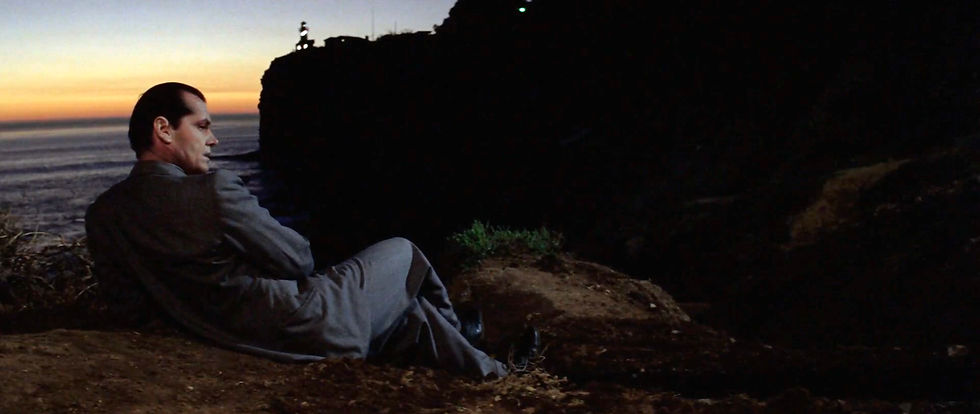
Roman Polanski’s direction is nothing short of perfection. Like an ace conductor conducting a fifty-piece orchestra playing a symphony, he unifies every cinematic element — sound, framing, editing, lighting, performance, close-ups — into a harmonious whole, with a staggering rhythm, engaging pace, seductive tone, psychological tension, and emotional force.

In the film’s first three shots alone, Polanski firmly establishes his control and tone by showing incriminating photographs, a devastated man studying them, and a calm, suited figure sitting nearby who offers him a drink.

In that brief sequence, with minimal exposition, Polanski conveys a wealth of information. We recognize the setting as a detective agency, understand that the man in the white suit (“Jake”) is the detective, sense that from the mention of newly installed blinds that “Jake" isn’t wealthy, and glimpse his concealed compassion by the simple act of him offering a drink. It's all communicated visually and behaviorally — and that’s just the film's first minute.

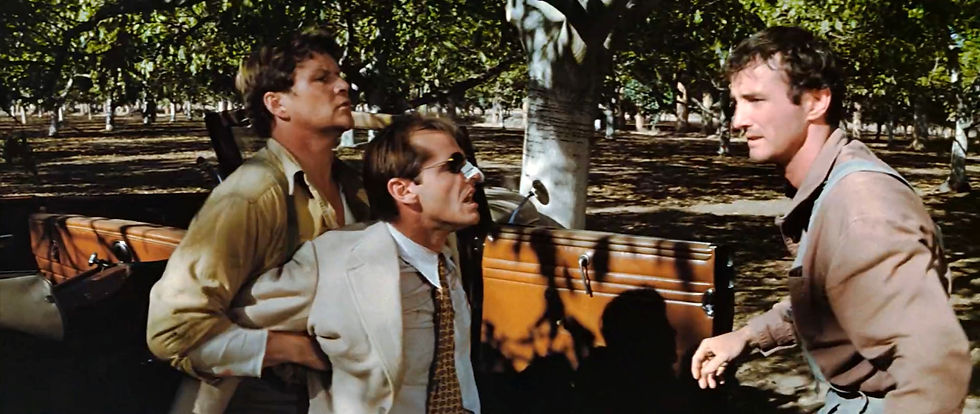
Polanski's choices are so engagingly revealing that we’re compelled to keep watching, eager to see how events unfold. Largely told from “Jake’s” point of view, we feel we’re solving the mysteries with him — whether through the intrigue of watching action through binoculars as “Jake” tracks “Mulwray”, or the pulse-pounding tension created by camera placement and editing when “Jake” tries to escape the orange grove. The direction isn’t just beautiful; it touches both intellect and emotion.

Polanski also envisioned the film’s distinctive style. In his autobiography Roman by Polanski, he described it as “a film about the thirties seen through the camera eye of the seventies". He wanted the era to feel authentic through meticulous details — sets, costumes, and dialogue — rather than by mimicking a 1930s movie style. As such, he shot in color and widescreen, and incorporated then-new handheld camera work in key moments — tracking characters as they walk or fight, to heighten tension.
Finding Towne’s original script long and confusing, Polanski helped reshape the story, spending eight weeks tightening it with Towne. Influenced by the Watergate scandal that was dominating news headlines, Polanski pushed the film's theme of corruption even further. He also insisted on a scene taking place in Chinatown (absent from Towne’s draft), though Towne preferred keeping Chinatown as metaphor for a corrupt abyss. Their collaboration was famously contentious, marked by daily arguments.

Their fiercest disputes concerned a potential romance between “Jake” and “Evelyn” and the ending. As Polanski recalled: “I wrote each of these two scenes the night before they were actually shot. To this day, Towne feels my ending is wrong; I am equally convinced that his more conventional ending would have seriously weakened the picture”.

Most side with Polanski. The final scene — set in Chinatown (the film’s only sequence there), is widely regarded as one of the greatest endings ever put on celluloid (it’s certainly one of the most unforgettably devastating I’ve ever seen). Some, including Towne and Polanski himself, believe its darkness was shaped by personal tragedies that marked Polanski’s life.


One of cinema’s greatest and most polarizing figures, Roman Polanski was born in Paris, and at age three, moved to Kraków, Poland with his Polish-Jewish parents just before the Nazi's invaded. As war broke out and antisemitism ruled, they and the other Jews were forced to live in a Jewish ghetto. By age six, Polanski experienced fear, hunger, and witnessed senseless murder. Fearing the worst, his father sold the family valuables to a Catholic family outside the ghetto to secure refuge for Polanski should the family be separated. Polanski's mother, grandmother, and stepsister were systematically "deported", and on the day the ghetto was to be liquidated, his father helped him escape before being marched out with the remaining Jews at gunpoint. Polanski made his way to the Catholic family, who didn’t want to keep him, and he was passed from family to family, pretending to be Catholic. He was eleven when the war ended and soon reunited with his father, learning his mother had been murdered in the Auschwitz gas chambers, and that his other relatives also perished. Reintroduced to normal society at twelve, the alienation, dread, and paranoia of his youth would permeate his films, including “Chinatown”.

At 13, Polanski discovered acting through the Boy Scouts and soon worked in radio and theater, making his film debut in 1953 before enrolling at Poland’s National Film School in Łódź in 1954. His student short films brought early recognition, and his first feature, 1962’s “Knife in the Water”, earned international acclaim and a Best Foreign Language Film Academy Award nomination (the first for a Polish film).

Disillusioned with communist Poland, Polanski moved to France, then England, where he directed and co-wrote three feature films: 1965's "Repulsion", a critically acclaimed award-winning psychological horror thriller; the 1966 black comedy psychological thriller “Cul-de-sac"; and the 1967 gothic comedy horror "The Fearless Vampire Killers, or Pardon Me, But Your Teeth Are in My Neck”, where he met actress Sharon Tate, whom he married in 1968.

While in New York, he was enticed to Hollywood by Evans at Paramount under the pretense of directing the film “Downhill Racer”. But when there, Evans gave Polanski the galleys for the book “Rosemary’s Baby”, which Polanski immediately read and wanted to make into a movie. Polanski adapted and directed “Rosemary’s Baby”, a massive box-office hit that earned him a Best Adapted Screenplay Oscar nomination.

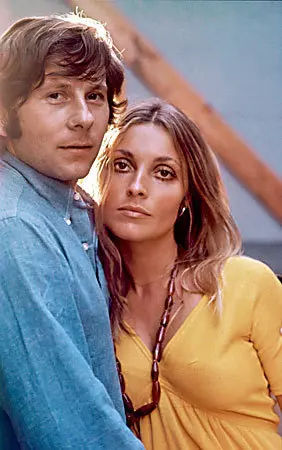
In August 1969, Polanski was in Europe preparing a new film when his wife, Sharon Tate, eight months pregnant, was savagely murdered in Los Angeles along with four others. Because the manner of the murders was so monstrously malicious, they sent shock waves across the country, particularly in Hollywood. Polanski rushed back to California to a media frenzy of false information — that the victims indulged in orgies, drugs, and witchcraft, and that this was the result of his macabre movies. The truth finally emerged when the Prosecuting Attorney wrote his book, Helter Skelter, revealing that the victims were not specifically targeted, and were savagely murdered by members of the Manson Family cult as instructed by its leader, Charles Manson. This inconceivable tragedy changed Polanski. As he recalled: “There used to be a tremendous fire within me — an unquenchable confidence that I could master anything if I really set my mind to it. This confidence was badly undermined by the killings and their aftermath". He became more pessimistic, and began to believe "that every joyous experience has its price”.

After a period of deep depression and a return to Europe, Polanski resumed filmmaking, including making a British adaptation of William Shakespeare’s “Macbeth”. Soon afterward, Evans persuaded him to return to Hollywood for “Chinatown”. Though hesitant to revisit California, Polanski channeled his personal darkness into the film, especially its bleak conviction that terrible things do happen. “Chinatown’s” immense acclaim solidified his standing as a leading director and a central figure of New Hollywood. He also makes a cameo in "Chinatown" as the knife-wielding short man.

Polanski directed more than forty films (including shorts and videos), and many regard “Chinatown” as his finest. His other features include “The Tenant”, “Tess” (earning him a Best Director Oscar nomination), “Bitter Moon”, “Death and the Maiden”, and his most personal work (drawing from his childhood), “The Pianist”, another award-winning masterpiece, including a Best Director Oscar win. To date, his final is 2023’s “The Palace”.

In 1977, Polanski was arrested for sexually assaulting a 13-year-old model. He pleaded guilty to unlawful sexual intercourse with a minor but fled the United States in 1978, fearing the judge would reject the plea agreement. He has lived primarily in Europe since, amid decades of legal battles, extradition efforts, and ongoing controversy, and remains a U.S. fugitive. He’s been married three times — to Polish actress Barbara Kwiatkowska, Sharon Tate, and his current wife of more than thirty-five years, Emmanuelle Seigner. As of this writing, Roman Polanski is 92 years old.

Central to the film’s massive appeal is the extraordinary cast of “Chinatown”, led by Jack Nicholson as “J. J. ‘Jake’ Gittes”, a private detective drawn into an overwhelming mystery. With effortless charisma, a cynical edge, and a gradual unveiling of vulnerability, Nicholson transforms the archetypal film noir detective (like those embodied by Humphrey Bogart) into a fully realized, modern, flesh-and-blood man. Where earlier screen detectives were often mythically heroic, Nicholson’s “Jake” is unmistakably human — guarded at first, and increasingly shaken as doubt, confusion, and pain erode his defenses.

It’s a spectacular performance from start to finish. There’s the whisper of compassion under his distant, cool attitude in the opening scene with “Curly”, and his gentle attempt to dissuade “Mrs. Mulwray” from hiring him. He handles “Evelyn” delicately over iced tea, only for his confidence to slowly give way to mounting confusion during their restaurant meeting. And his emotional collapse in the final scene is profoundly affecting. Through all these changing inner landscapes, Nicholson is effortlessly natural and emotionally honest. It’s one of the defining performances of his career and earned him a Best Actor Academy Award nomination.


Rightfully one of the biggest movie stars of the 1970s and beyond, and regarded as one of cinema’s greatest actors, Jack Nicholson was born and raised in New Jersey with two much older sisters and a mother who ran a beauty parlor from their home. Though a bright student with top grades, he rebelled against authority, was voted high school class clown, and as he told The Independent in 1993: “At school, I created a record by being in detention every day for a whole year”. While visiting California with his oldest sister, June, he decided to stay and pursue acting. He studied acting, worked odd jobs at film companies, began acting on stage, on television in 1955, and debuted in movies in the title role of 1956’s “The Cry Baby Killer”. Over the next decade, Nicholson appeared in more than two dozen film and TV projects, mostly B rate.

Disenchanted with his acting prospects, Nicholson thought he'd have a better shot as a writer-director, and wrote and produced several films in the 1960s, including writing the 1967 counterculture film “The Trip”. Around this time, he befriended producer Bob Rafelson, and co-wrote and co-produced Rafelson’s directorial debut, 1968’s “Head", starring the band The Monkees (with Nicholson in a brief cameo). Though “Head” failed commercially (later gaining a cult following), it began what was probably the most important creative partnership of Nicholson’s career.


Starting with “Head”, Rafelson and his production company, Raybert Productions (later BBS Productions) launched a wave of independent films that touched on the youth counterculture ideals. They financed the 1969 landmark film “Easy Rider” (loosely inspired by “The Trip”), and when actor Rip Torn dropped out, they suggested Nicholson take his part. It earned Nicholson his first Academy Award nomination (Best Supporting Actor) and made him a star. Nicholson followed it starring in Rafelson’s “Five Easy Pieces” (earning a Best Actor Oscar nomination), then BBS’s “The King of Marvin Gardens” and BBS’s “The Last Detail" (earning another Oscar nomination). A key force in the American New Wave, BBS movies told gritty stories about the lives and anguishes of working-class people with a frankness American films had never previously displayed. This shift in realism also brought actors that looked like real people — not the untouchable gods and goddesses of the past. Nicholson embodied this shift. The commercial success of “Chinatown" and the following year’s “One Flew Over the Cuckoo’s Nest” cemented his status as one of Hollywood’s top and most skilled stars.


To date, Nicholson has appeared in roughly 80 films, winning three Academy Awards (“One Flew Over the Cuckoo’s Nest”, “Terms of Endearment”, and “As Good as It Gets”) out of 12 nominations (eight Best Actor, four Best Supporting Actor), making him the most nominated male actor in Oscar history (only Meryl Streep has more, with 21 nominations). His extensive filmography includes “Carnal Knowledge”, “The Departed”, “Reds”, “The Passenger", “About Schmidt", "Prizzi’s Honor”, “The Shining”, “A Few Good Men", “Batman”, ”Tommy”, “The Postman Always Rings Twice”, “Something’s Gotta Give”, “Broadcast News”, and his most recent, 2010’s “How Do You Know”. Beyond Oscars, he's won three BAFTAs (including one for “Chinatown”) from seven nominations, six Golden Globes (one for “Chinatown”) from seventeen nominations, six New York Film Critics Circle Awards (one for “Chinatown”) from ten nominations, a Grammy Award, the AFI Life Achievement Award, the Cecil B. DeMille Award, the Kennedy Center Honor, France’s Commander of Arts and Letters, and many other honors.

Around the time of “Chinatown”, Nicholson learned through a Time magazine interview that the woman he believed was his mother was actually his grandmother, his sister June was his biological mother, and his other sister was his aunt. Pregnant as a teenager, June’s parents raised Jack as their son to avoid scandal. Nicholson was married once and had a well-known 17-year, non-monogamous relationship with actress Anjelica Huston. He has six children with five women, including actress Susan Anspach and supermodel Winnie Hollman. As of this writing, Jack Nicholson is 88 years old.


Just as Nicholson reinvents the private eye in 'Chinatown", Faye Dunaway crafts a modern femme fatale as “Evelyn Cross-Mulwray". Her controlled, almost ruthless intensity is undercut by a haunting vulnerability that keeps us (and “Jake”) unsure of her true nature. The precision with which she reveals “Evelyn’s” mounting anxiety is masterful — faint flickers of panic in the iced tea scene, suppressed emotion as she waits outside for her car, guarded tenderness in the bedroom, and finally, a shattering unmasking of a plethora of genuine emotions in the revelatory scene with “Jake”. Dunaway makes “Evelyn” aggressive, feminine, and fragile all at once in an unforgettable portrait of a woman slowly unraveling. The performance earned her Academy Award, BAFTA, and Golden Globe Best Actress nominations and crystalized her status as one of the defining stars of the 1970s.


By the time she made “Chinatown”, Dunaway was already a sensation after her breakout in “Bonnie and Clyde”, though with a reputation for being difficult. For this reason, producer Evans initially resisted casting her in “Chinatown” (he preferred Jane Fonda, who declined), but Polanski insisted, feeling that Dunaway's particular “retro” beauty — reminiscent of his mother — was essential to the film. Knowing Dunaway socially, he believed he could manage her, and she was cast. Her temperament during production became legendary. Assistant director Howard Koch called her “difficult", Nicholson jokingly nicknamed her “Dread, The Dreaded Dunaway” (which amused her), and Polanski claimed she fixated on her appearance, requested rewrites whenever she forgot lines, and insisted on having Blistex applied to her lips between every take.
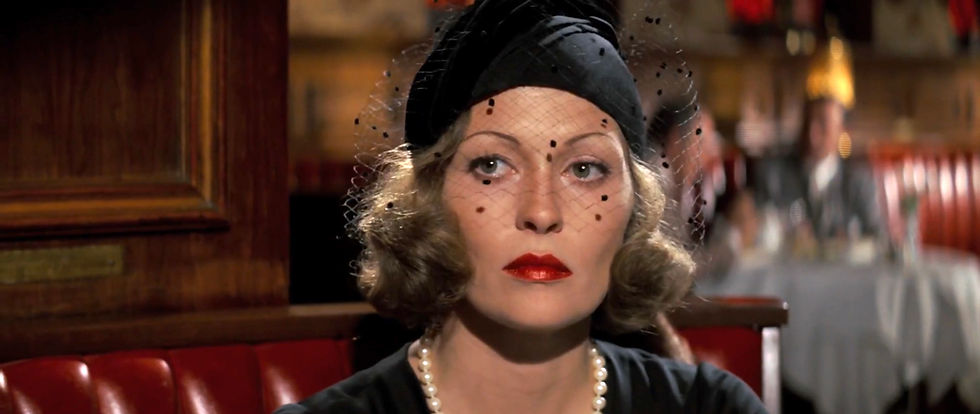
Tensions peaked filming the restaurant scene, when a single stray hair of Dunaway's kept catching the light. After failed attempts to smooth it down, Polanski plucked it out himself, prompting Dunaway to erupt into a hysterical, foul-mouthed rage and retreat to her trailer. Once he apologized and she calmed down, they reshot the scene, this time with “Evelyn” wearing a hat.
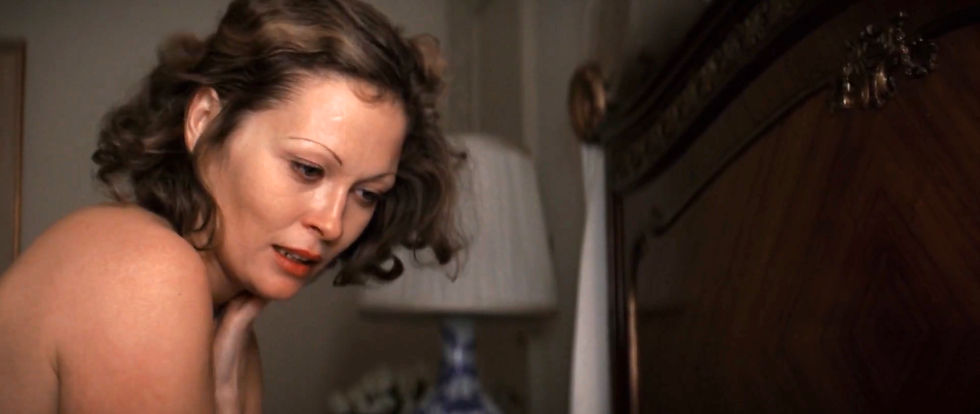

In the 2024 documentary “Faye”, Dunaway revealed she’s been diagnosed with bipolar disorder and is now medicated. Reflecting on this and her career, she acknowledged: “Throughout my career, people know that there have been tough times. But I don’t need to make an excuse about it. I’m still responsible for my actions. But this is what I came to understand was the reason for them. It’s something you need to be aware of and you need to try to do the right thing to take care of it”. Of “Chinatown”, Dunaway said she and Polanski had a “complicated time”, describing him as a terror but admitting he likely saw her the same way. She added that Nicholson’s presence helped her enormously. Recalling the hair incident, she called it offensive and triggering — “enough to set off the manic depression”.

Whatever her temperament, Dunaway’s commitment to her craft was absolute — so much so that she urged Nicholson to slap her for real in their pivotal scene “or it won’t work” (which he did). She remains one of our great actresses, and her work as “Evelyn” stands among the medium’s finest performances. I still remember being stunned and awed by her onstage in “Master Class”, riveted by her every word. You can read more about the life and career of Faye Dunaway in my previous post on “Bonnie and Clyde”. Click on the title to open it.

Every actor in “Chinatown” is superb, but for brevity (and to avoid spoilers), I’ll highlight a few familiar faces without detailing their characters. First is John Huston, who is phenomenal as “Noah Cross”, a man whose kind elder-statesman facade masks something far darker.


Readers of this blog know John Huston as a director of Hollywood classics, but he was also an actor. The son of actor Walter Huston, he began acting onstage before moving into writing, directing, and producing movies, while continuing to act throughout his life. From 1929 to 1987, he appeared in more than 40 films and under a dozen TV shows, mostly in supporting roles, with “Chinatown” arguably his best-known. Huston's imposing presence, resonant voice, and age give “Noah” immense gravitas. Watch how effortlessly he listens and responds to “Jake” in the lunch scene, his genial warmth gradually hardening into something unsettling. He conveys far more than the dialogue suggests, and despite limited screen time, his presence permeates the film. It’s no surprise that AFI ranked "Noah Cross” the 16th Greatest Villain in movies. Huston later directed Nicholson (and his daughter Anjelica Huston) in "Prizzi's Honor”. I’ve written more about John Huston in the posts “The Maltese Falcon”, “The Misfits”, “The African Queen”, and “The Treasure of the Sierra Madre”. Be sure to check them out.

John Hillerman plays “Russ Yelburton”, Deputy Chief of the Los Angeles Department of Water and Power. With little screen time, he perfectly captures the polished insincerity of a powerful bureaucrat — exactly the kind of believable performance that grounds a film.


Texas-born John Hillerman discovered acting while serving in the U.S. Air Force. After his discharge, he moved to New York City to study and pursue theater, appearing in more than 100 stage productions, including three on Broadway. Struggling financially, he relocated to Hollywood, debuting in the 1970 film “They Call Me Mister Tibbs!”, followed by roles in “The Last Picture Show”, “What's Up, Doc?”, "Paper Moon”, “Blazing Saddles", and “Chinatown”. He achieved major fame co-starring with Tom Selleck on the TV series “Magnum, P.I.” (from 1980–88), winning an Emmy Award (with four nominations) and a Golden Globe (with five nominations). Between 1970 and 1996, he appeared in over 70 films and numerous TV shows, including “History of the World, Part I”, “Audrey Rose”, “The Day of the Locust”, “The Thief Who Came to Dinner”, and TV shows like “One Day at a Time”, "Murder, She Wrote”, and co-starring in“The Betty White Show”. He never married. John Hillerman died in 2017 at 84.

Perry Lopez plays “Lieutenant Lou Escobar", a weary cop who once worked with “Jake” in Chinatown, who is conducting his own investigation. His chemistry with Nicholson crackles as "Escobar’s" temper flares against “Jake’s” cool composure. Lopez's enthralling performance is yet another that makes us completely believe the world inside the film.


Born in New York City of Puerto Rican descent, Perry Lopez began in theater, including in the original 1950 Broadway cast of “South Pacific”. Signing with Warner Brothers in 1954, he debuted in movies as “Tomas” in “Creature from the Black Lagoon” and worked steadily in more than 70 films and TV shows (mostly TV) through 1994. Film credits include "Battle Cry", "Mister Roberts”, "Rebel Without a Cause”, "The Young Guns", "Flaming Star", "Taras Bulba", "McLintock!", "Kelly's Heroes", "The Two Jakes", his final, "Confessions of a Hitman”, and stints on TV shows as varied as "Alfred Hitchcock Presents", "Zorro", "Border Patrol", "Star Trek”, "Voyage to the Bottom of the Sea", "Hec Ramsey", "The Fall Guy", and "Charlie's Angels”. “Chinatown” may be his best-known role. He was married just over a year to actress Claire Kelly. Perry Lopez died in 2008 at the age of 78

Burt Young plays “Curly”, “Jake’s” client who discovers his wife’s infidelity. In a brief role, Young portrays a rough guy having a breakdown of sorts, creating a fully realized character in the blink of an eye — proof of a fine actor.

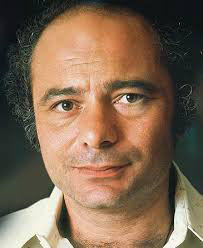
New York City-born Burt Young studied with Lee Strasberg at the famed Actors Studio. After early TV and film roles, he rose to fame as “Paulie” in the 1976 film “Rocky”, earning a Best Supporting Actor Oscar nomination and reprising the role in five sequels. His extensive film and TV credits, which number over 160, include "The Gambler", “Once Upon a Time in America”, “The Killer Elite”, "The Pope of Greenwich Village", "Win Win", and "Cinderella Liberty", and TV shows like "The Sopranos", "Walker, Texas Ranger", "Law & Order", "The Outer Limits", "Alfred Hitchcock Presents", and "Miami Vice". He was married and widowed once. Burt Young died in 2023 at the age of 83.

Another memorable small part belongs to Diane Ladd as “Ida Sessions”, a mysterious woman “Jake” encounters. Direct and haughty yet affecting, she leaves a lasting impression.


Born in Mississippi and a third cousin of Tennessee Williams, Diane Ladd built a prolific, award-winning career spanning 140+ film and TV roles. The same year as “Chinatown”, she won a BAFTA and earned Oscar, Golden Globe, and New York Film Critic Circle Award nominations for “Alice Doesn't Live Here Anymore”, and later appeared in the sitcom adaptation, "Alice" for two seasons, winning a Golden Globe. She received additional Oscar nominations for “Wild at Heart” and “Rambling Rose”, and appeared in films like "National Lampoon's Christmas Vacation", "The World's Fastest Indian", "Inland Empire", "Primary Colors", "Something Wicked This Way Comes", and TV shows such as "The Secret Storm", "Gunsmoke", "Kingdom Hospital", "Dr. Quinn, Medicine Woman", "Enlightened", "ER", was a series regular on "Chesapeake Shores”, and earned a total of three Emmy and four Golden Globe nominations. She was married three times, including to actor Bruce Dern (with whom she had two children, one of whom is actress Laura Dern). Diane Ladd died in 2025 at the age of 89.


A quick mention of Joe Mantell, who plays "Lawrence Walsh, one of “Jake’s” associates. Watchers of the movies on this blog have seen him as the traveling salesman in "The Birds”, and in his Oscar-nominated role as the title character’s best friend in “Marty”., and you can read more about Joe Mantell’s life and career in my post on the latter.
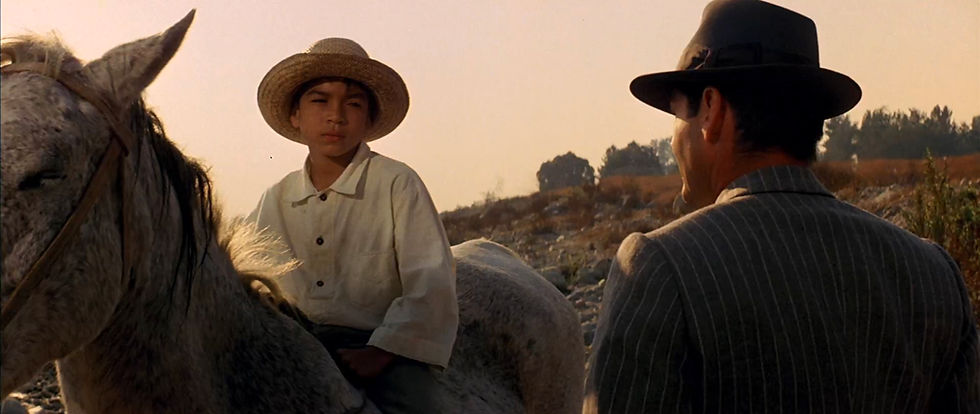
In addition to Towne’s Best Screenplay Oscar win and nominations for Best Picture, Director, Actor, and Actress, “Chinatown” earned additional Academy Award nominations for Production Design (Richard Sylbert, W. Stewart Campbell, and Ruby R. Levitt), Cinematography (John A. Alonzo), Costume Design (Anthea Sylbert), Film Editing (Sam O’Steen), Sound (Charles Grenzbach and Larry Jost), and Original Dramatic Score (Jerry Goldsmith). AFI named Goldsmith’s evocative score for “Chinatown” the 9th Greatest Film Score of All-Time.

"Chinatown" faced stiff Oscar competition from “The Godfather Part II”, which swept the awards winning six statues, including Best Picture.

A sequel to "Chinatown" called “The Two Jakes” followed in 1990, written by Towne and directed by Nicholson, who reprised his role of “Jake”. Lopez also returned as "Escobar". It was poorly received.
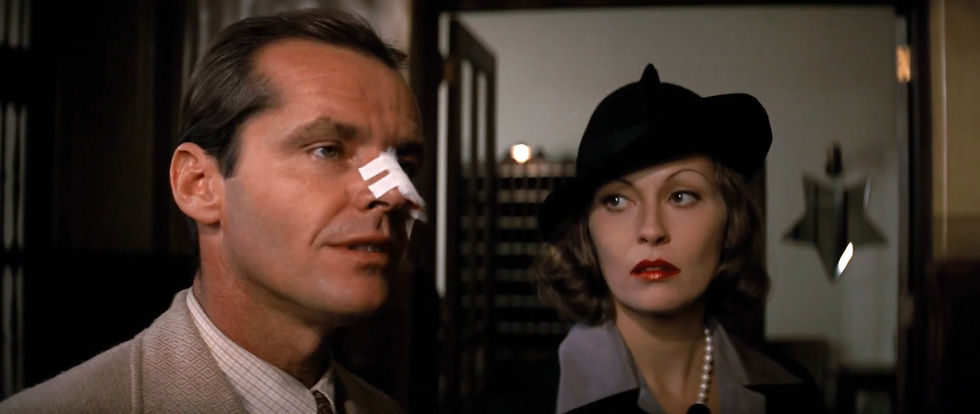
This week’s film remains one of cinema’s greatest — a chilling portrait of corruption wrapped in a spellbinding, colossally entertaining detective story. Enjoy “Chinatown”!
This blog is a (currently triweekly) series exploring classic films from the silent era through the 1970s. Each post recommends a film to watch, aiming to entertain, inform, and deepen your appreciation of cinema — its stars, directors, writers, the studio system, and more. Be sure to visit the HOME page to learn more, subscribe for email updates, and check out THE MOVIES page for a full list of films. Please comment, share with others, and subscribe so you never miss a post. Thanks for reading!
YOU CAN STREAM OR BUY THE FILM ON AMAZON
OTHER PLACES YOU CAN BUY THE FILM:
As an Amazon Associate I earn from qualifying purchases, and any and all money will go towards the fees for this blog. Thanks!!
TO READ AFTER VIEWING (contains spoilers):

Joe Mantell utters the shattering line at the end of “Chinatown”: "Forget it, 'Jake', It's Chinatown”, which was chosen by AFI as the 74th Greatest Movie Quote of All-Time.


"Chinatown" was a good film, and Faye Dunaway, who's a good actor, was really good in this movie.
A great film! Wonderful to see John Huston on the actor's side of the camera. I really enjoyed his performance along with all the others.
Beyond being a masterpiece in every respect, this film reminds us that some things never really change. Corruption remains just as pervasive in our cities today as it is portrayed in Chinatown. I’m really glad you included this movie in your blog. I also appreciated that you took the time to highlight actors like Perry Lopez, Burt Young, Joe Mantell, and the recently deceased Diane Ladd... artists who may be familiar to film enthusiasts but aren’t as widely recognized by the general public. I always enjoy reading your blog because of the depth of your research and how much I learn each time. Thank you for continuing to publish this blog.