


193. DR. NO, 1962
Style, danger, and the start of a cinematic phenomenon

Take a tall, dark, and handsome secret agent with effortless charm and untouchable confidence, arm him with ingenious life-saving gadgets, surround him with beautiful women, throw him into nonstop danger, pit him against an evil mastermind who plans to take over the world, give him a license to kill, and presto — you’ve got adrenaline-fueled cinematic dynamite. The agent’s name is “James Bond”, his code number is “007”, and this superhero’s legendary screen career began with this week’s irresistibly entertaining adventure, “Dr. No”.
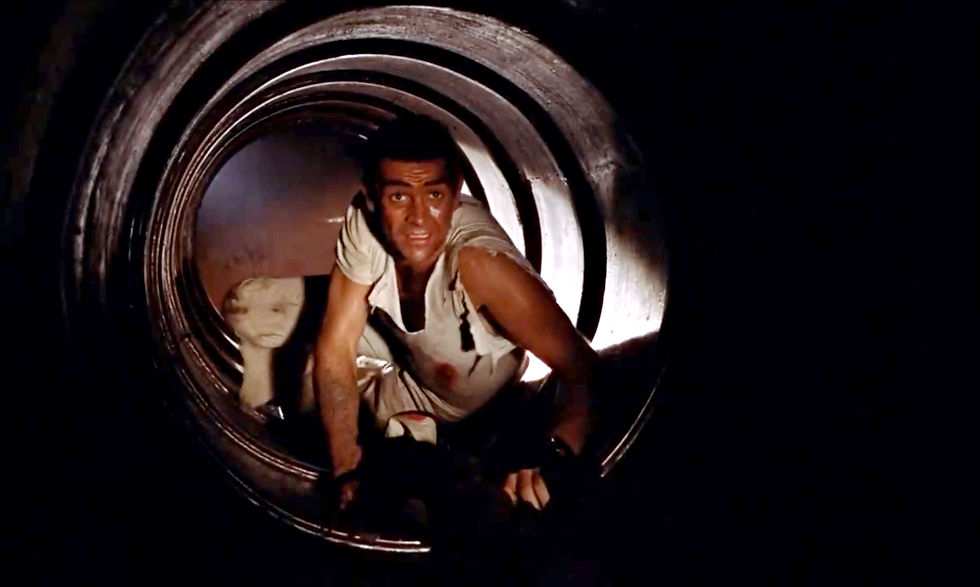
With enough cool to keep glaciers from melting, this modishly slick cocktail of sex, danger, and humor launched one of the most iconic and successful franchises in movie history. More than sixty years and twenty-seven films later, the James Bond series is still going strong. The films may have become more extravagant over time, but it all began with the tantalizing fantasy, titillating escapism, and sheer entertainment of this sharp, stylish, and explosively fun spy thriller, for “Dr. No” established the irresistible formula that would define an entire genre unto itself — the James Bond movie

“Dr. No” opens with two cold-blooded murders in Jamaica — that of British Secret Intelligence Service Station Chief “John Strangways” and his secretary “Mary Prescott” — which prompts the head of MI6 (Military Intelligence, Section 6) to send secret agent “007” to Jamaica to investigate. From the moment “Bond” arrives on the island and narrowly escapes being kidnapped, it's clear that danger lurks everywhere and no one can be trusted.

Before long, “Bond” is dodging assassins, tearing through wild car chases, tangling with mysterious women, surviving radioactivity, and facing off with a deadly tarantula. Piece by piece he uncovers a sinister plot to seize control of Cape Canaveral rockets in a bid towards world domination. At the center stands a chillingly unshakable mad scientist with prosthetic metal hands named “Dr. No”, and the film is a race to stop this ruthless mastermind from destroying the world. The film’s real magic lies not in the plot, but in the sleek, witty, suspenseful, and sexy style in which it unfolds. It’s so electrifyingly fun and rousing that you’ll be glued to the screen.

The perfect team created this sparkling dose of espionage, beginning with British novelist Ian Fleming, who conceived and introduced “James Bond” in his 1953 novel Casino Royale. Drawing inspiration from spies and commandos he encountered while serving in British Naval Intelligence during World War II, Fleming created a hero who was equal parts assassin, gentleman, and fantasy figure. Over the next thirteen years, he wrote eleven successful novels and two short-story collections centered around the exploits of “Bond”.


In 1960, Canadian film producer Harry Saltzman optioned the Bond novels (except for Casino Royale — already optioned by someone else) for six months, but was having trouble raising money to get them to the screen. Enter Albert R. 'Cubby' Broccoli, a successful American producer working in London who split from his producing partner (ending their company Warwick Films), and wanted to bring the Bond novels to the screen. Broccoli and Saltzman partnered, forming their own company (Danjaq, with EON Productions as the British arm) specifically to produce Bond movies. From the start, they planned “Dr. No” as the first in a series of Bond movies.

They found funding with United Artists (UA), a film company founded in 1919 by Charles Chaplin, D. W. Griffith, Mary Pickford, and Douglas Fairbanks, that financed and distributed movies, allowing the people they partnered with to retain a majority of artistic control over their own projects. Broccoli and Saltzman made a six-picture deal with UA, and picked Fleming’s sixth Bond novel, "Dr. No" as the first, feeling it was easiest to make with the low-budget they were given. Writers Richard Maibaum, Wolf Mankowitz, Johanna Harwood, and Berkely Mather were hired at different times to write and doctor the screenplay.

The producer’s first stroke of genius was hiring British director Terence Young. By all accounts, Young was “Bond”-like himself — elegant, sophisticated, with caviar and Dom Pérignon tastes, yet approachable and generous — a sensibility he brought directly to the film. A devoted fan of Fleming’s novels, Young wanted to remain as faithful to Fleming’s writing as possible while realizing that the sex and violence would only work onscreen if delivered with wit and charm.

As a result, Young brought a distinctive tone to “Dr. No”, one that balanced peril, sex, and elegance with dry humor. That blend is established immediately in the now-famous opening credits, when a white dot becomes the view from inside a gun barrel, down which we see a man turn and fire towards us, with blood washing down the screen as the sexy, brassy horns of the James Bond musical theme sound.
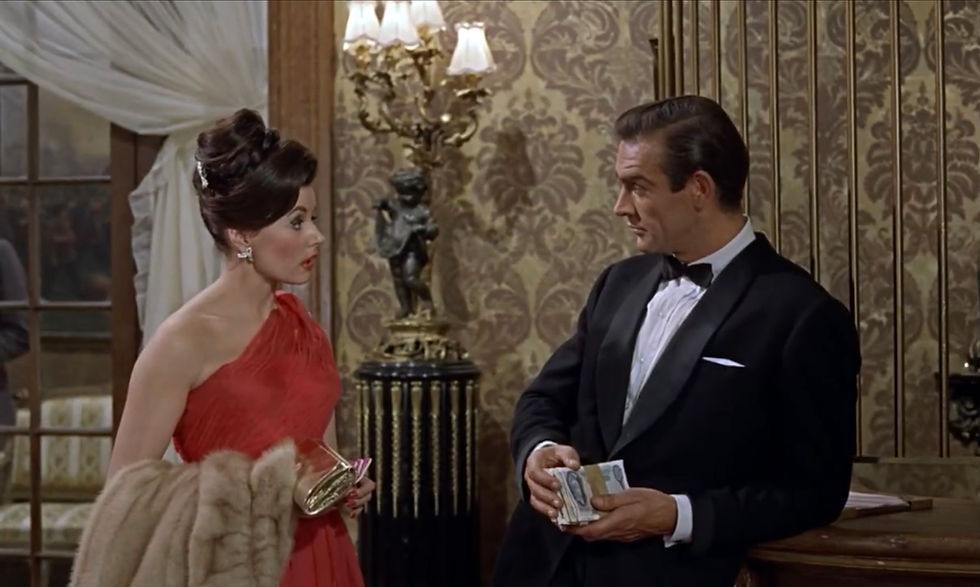
The tone continues with “Bond’s" introduction at a casino, where, dressed in a smart tuxedo, he plays chemin de fer with the beautiful “Sylvia Trench”. The scene drips with flirtation as the two ravishing creatures trade devilishly seductive glances and innuendo, from “Bond’s” “Looks like you’re out to get me” to “Trench’s” reply: “It’s an idea at that”.

Even the film’s violence is handled with this light tongue-in-cheek tone. Whether “Bond” is brawling with a chauffeur, being hosed down alongside “Honey” after being captured, or ending a deadly car chase with the quip, “I think they were on their way to a funeral”, the film never becomes cheerless. Unlike Fleming’s novels, “Bond” is somewhat immune to lasting pain or injury, allowing for exciting tension rather than bleak seriousness.

The hypnotic flavor Young brought to “Dr. No” became the template and personality for the entire Bond series. The instant success of this film helped budgets rise for subsequent Bond movies, so sets became grander, gadgets more elaborate, and action sequences more explosive. But much of what is now recognized as “James Bond style” began here, thanks to Young’s imagination and taste.


Born in Shanghai, China, to British parents, Terence Young moved back to England as a child. He began his film career as a writer before serving in the British Army and as an intelligence officer during World War II. Afterwards, he returned to screenwriting before directing his first film, 1948's "Corridor of Mirror", immediately followed by the box-office hit "One Night with You". He continued directing many international co-productions, including the 1953 success "The Red Beret", produced by Broccoli and his company Warwick Films. After several other directors turned it down, Broccoli offered Young "Dr. No", which Young followed with the even more successful 1963 Bond film "From Russia with Love", topped by his third Bond film, "Thunderball" in 1965, before he left the series. Though the Bond films marked the highpoint of his career, Young directed nearly forty films over the course of forty years, others of which include "Wait Until Dark", "Red Sun", "The Valachi Papers", "Mayerling", "The Rover", and "Inchon". He was married twice. Terence Young died in 1994 at the age of 79.

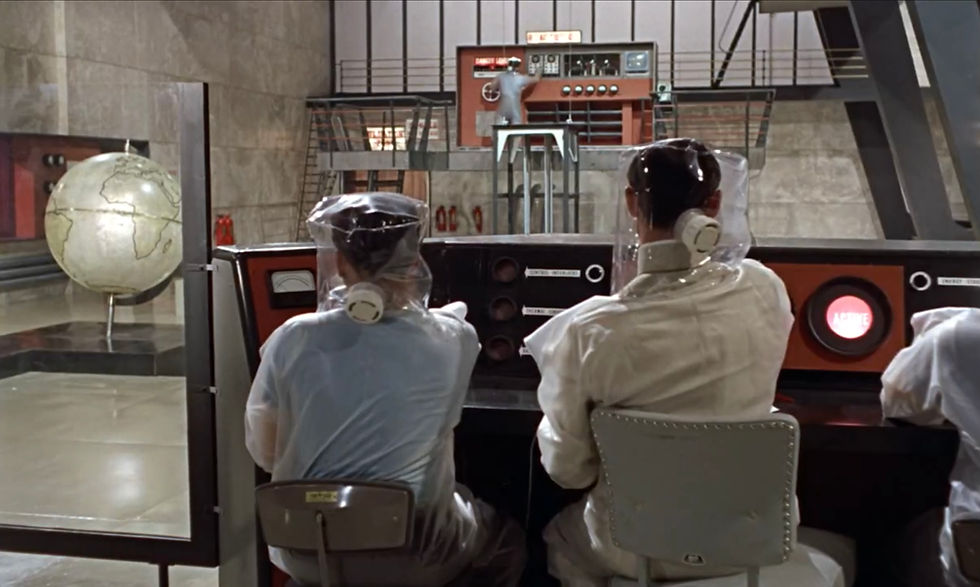
Young’s choice to endow “Dr. No” with the larger-than-life flair of a superhero comic but still operate in the real world, guided his creative team to create a heightened reality that turned this low-budget film into what plays like a big budget blockbuster. The art direction of Ken Adam and Syd Cain transformed painted cardboard and plastic into convincing wood paneling and leather, while rooms with giant aquariums and domed ceilings give an otherworldly feel. The sound effects (like gunshots or breaking glass) were slightly exaggerated, spacey electronic sounds were sporadically used as atmospheric noises, and editor Peter Hunt broke from convention by cutting directly on movement, giving the action more speed and energy.

The staggering success of “Dr. No” and the next three Bond films (“From Russia with Love”, “Goldfinger”, and “Thunderball”) greatly helped transform the movie industry. Independently produced by UA at a time when the Hollywood Studio System was already weakening, they proved that massive hits could be made outside the studio structure. That, and the fact that the filmmakers had such creative freedom, considerably helped pave way for a New Hollywood (or American New Wave) to surface (see my posts on “The Miracle Worker” and “Bonnie and Clyde” for more on the birth of that).

On par with the importance of Young’s contributions to the Bond series was the casting of “James Bond”, and producers Broccoli and Saltzman considered (and in some cases tested) a lineup of actors that included David Niven, Cary Grant, Roger Moore, Rex Harrison, Trevor Howard, Max von Sydow, Patrick McGoohan, and Albert Finney. Yet none felt quite right.

Someone then suggested a young Scottish actor named Sean Connery. When Broccoli and Saltzman met him, they were struck by his tough, raw, masculine, yet surprisingly light-on-his-feet physical presence. They had found their “Bond”. After convincing UA to take a chance on this newcomer (after seeing Connery's screen-test, UA reportedly wired the producers "No, Keep trying"), Connery was signed to a multi-picture deal.

Young immediately recognized Connery’s star potential and helped refine his rough edges without wiping away the ruggedness that made him so appealing. He coached Connery in style and sophistication, took him to his own high-end tailor and shirtmaker, and personally oversaw much of Connery’s wardrobe. The result became iconic — an impeccably polished and suave “Bond" who still radiated masculine power. Connery’s sleek suits, effortless cool, and underlying toughness became inseparable from the “007” character itself. Decades later, the American Film Institute (AFI) called Connery’s “James Bond” in “Dr. No” the 3rd Greatest Hero in movies.

Connery proved the perfect “Bond" — cool under pressure, fiercely capable, effortlessly sexy, and utterly believable as a man who lives on the edge. He could be charming, ruthless, seductive, amused, or unexpectedly vulnerable, often all within the same scene. Those layers gave “Bond” a humanity the role easily could have lacked, making him not just exciting, but overwhelmingly magnetic.

Connery’s performance was star-making from his very first scene — sitting at the casino table, introducing himself to "Sylvia Trench” (and the audience) with three immortal words: “Bond, James Bond”. Connery delivers that line with such relaxed confidence and effortless authority that it instantly became one of the most iconic moments in movie history, which AFI ranked the 22nd Greatest Movie Quote of All Time.

From there, Connery dominates the screen from beginning to end — in moments like being casually flirtatious with “Honey” on the beach, quietly suspicious at the airport, fearless while crawling through deadly air vents, or unflinchingly sarcastic with “Dr. No". Debonair, witty, brutal, and solidly chill, Connery wrote the gold standard for “James Bond” — the performance every actor who followed as “007” would inevitably be measured against. In the process, he transformed himself into an international superstar.


Born into poverty in Edinburgh, Scotland, Sean Connery was the son of a cleaning woman and a factory worker/truck driver. He left school at a young age and worked a string of jobs (including milkman) before joining the Royal Navy at sixteen. After being discharged for medical reasons, he worked as a bricklayer, lifeguard, coffin polisher, truck driver, artist’s model, even babysitter, and took to bodybuilding, reportedly competing in the 1950 Mr. Universe contest. Tall, athletic, and naturally appealing, Connery briefly considered becoming a professional soccer player before turning to acting instead. After working backstage at Edinburgh’s King’s Theatre, he made his stage debut as a chorus boy in a production of “South Pacific”.

By the mid-1950s, Connery was landing stage roles in London along with small parts in films and British television. His first substantial movie role came in 1957’s “No Road Back”, and his first lead in the 1957 TV production of “Requiem for a Heavyweight”. He continued onstage in London, in movies, and on TV, with key roles in the 1959 Walt Disney film “Darby O'Gill and the Little People” (which caught the attention of Broccoli and his wife), and 1961’s "On the Fiddle” (which led Saltzman to arrange the meeting that would change Connery’s life and movie history).

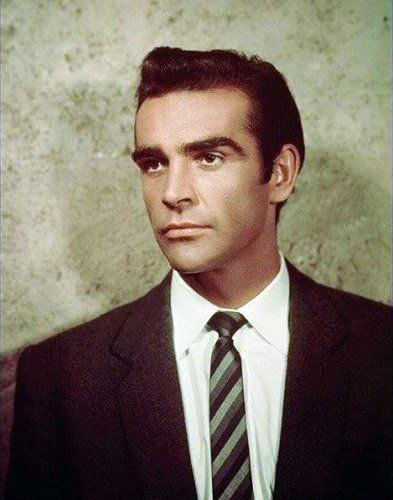
By accepting “Dr. No", Connery also agreed to play "Bond" in five films — a commitment he hesitated to make, unsure whether such a role might trap him. Instead, it transformed him into one of the world’s biggest stars. Connery’s next four Bond films were "From Russia with Love” (whose enormous success began Bondmania), “Goldfinger” (a staggering blockbuster that, at the time, became one of the top ten highest grossing films in history), “Thunderball” (an even bigger record-breaker), and “You Only Live Twice” (another big moneymaker). By now, Connery had grown frustrated with the role. Worried about being permanently typecast as “007” and having had a falling-out with Broccoli over money (reportedly wanting partnership status in the EON Bond films), Connery walked away, and Australian actor George Lazenby stepped in for “On Her Majesty's Secret Service”.


Yet Connery’s absence only seemed to increase his value. He returned as "Bond" in 1971’s “Diamonds Are Forever” with a then-record $1.25 million salary (which he famously donated to charity), a percentage of the profits, and a deal allowing him to make two films of his choosing. Connery played “Bond” one last time in 1983’s “Never Say Never Again” (a non-EON production due to complicated legal battles surrounding the franchise), reportedly taking the role because of its $3M salary, profit participation, script approval, and as revenge against Broccoli.
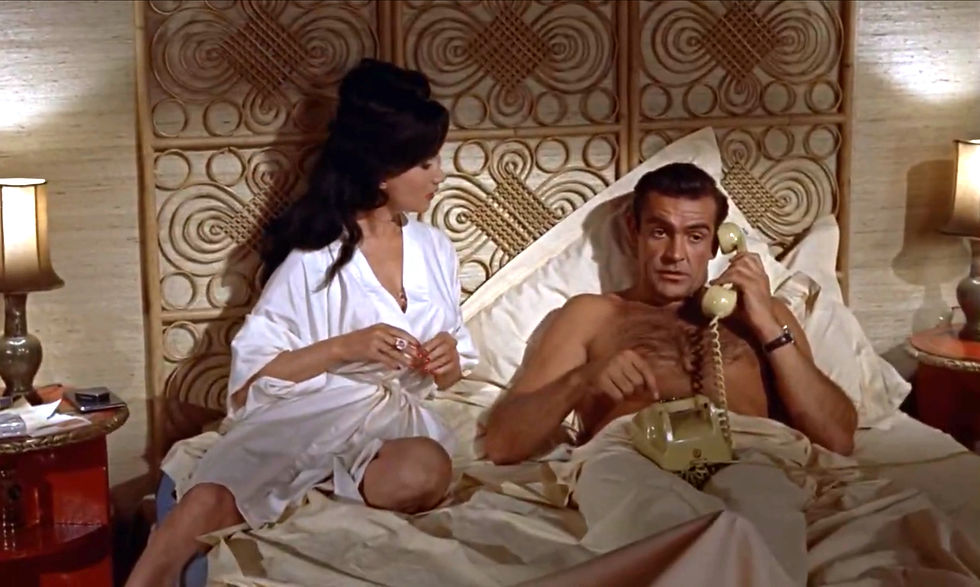

Over nearly sixty years, Connery proved in more than eighty non-Bond films and TV productions that he was far more than just a suave secret agent. He won a Best Supporting Academy Award for “The Untouchables”, becoming the first Scottish actor to win a major Oscar. His remarkable career also included standout performances in “The Man Who Would Be King”, “The Hunt for Red October”, “Marnie", “The Hill”, “Robin and Marian”, “Finding Forrester”, “Murder on the Orient Express”, “Zardoz”, and as the father of "Indiana Jones” in “Indiana Jones and the Last Crusade”. His many honors include four BAFTA nominations with one win and their Fellowship Award, five Golden Globe nominations with one win and their Cecil B. DeMille Award, the Kennedy Center Honor, France’s Order of Arts and Letters, and a knighthood from Queen Elizabeth II. He also won a Tony Award in 1998 as producer of the play “Art”.

He was married twice, including to actress Diane Cilento, and his son is actor and director Jason Connery. I briefly met Connery at the Golden Globes and was struck by how tall he was (turns out he was 6’2"). Sean Connery died in 2020 at age ninety. Despite all his acclaimed performances, he will almost certainly be remembered first and foremost as the definitive British MI6 agent “James Bond”, codename “007”.

Among the many Bond elements that “Dr. No” introduced to the world was the first true “Bond girl” — seductive, dangerous, and unforgettable women who would become one of the franchise’s defining trademarks. These women could be lovers, allies, villains, or victims caught in the crossfire of espionage and violence, and the tradition unforgettably began with Ursula Andress as “Honey Ryder,” a seashell diver drawn into "Dr. No's" deadly web.

Before we even see “Honey”, we hear her softly singing “Underneath the Mango Tree” before she emerges from the ocean in a now-famous white bikini, shells in hand, and a diver’s mask resting atop her head. She steps onto the beach, drops the shells into the sand, removes the mask, and shakes out her long, wet blonde hair. It's pure movie magic. Against the dazzling aqua water and sunlit sand, Andress appears almost mythic — like Botticelli’s "Venus" incarnate. Her breathtaking beauty will instantly stop anyone, including "Bond", in their tracks, and her entrance remains one of the most iconic in film history (homage was paid to it by both Daniel Craig and Halle Berry coming out of the water in subsequent Bond films). It transformed Andress into an international sensation and sex-symbol overnight.

But “Honey” is far more than a glamorous fantasy. Fiercely independent and more than ready to draw her knife to defend herself or her shells, she faces threats head-on without hesitation. Andress gives her warmth, innocence, strength, vulnerability, an adventurous spirit, and a quiet resilience on top of smoldering sensuality. The captivating result earned her a Most Promising Newcomer Golden Globe Award, and she remains one of the most memorable and beloved Bond women ever created.


Born in Switzerland to a Swiss mother and German father, Ursula Andress was independent and strong-willed from an early age, running away from boarding school at 18, studying art in Paris, and working in Rome as a model and nanny. Her striking beauty caught the attention of an Italian film producer, leading to small roles in three Italian films beginning with 1954's “An American in Rome”. A Hollywood executive persuaded her to move to Hollywood in 1955 despite the fact she barely spoke English and knew virtually no one there except Marlon Brando, whom she had met in Europe. Paramount Pictures signed her, but because of her limited English and nervousness about acting, the studio struggled to find her roles. After buying out her own contract, she signed with Columbia Pictures, only to encounter the same problem. She briefly gained publicity in 1955 while linked romantically with James Dean shortly before his death. In 1957, she married actor John Derek, and in 1962 appeared in a TV episode of “Thriller” titled “La Strega”, directed by Ida Lupino.


Just weeks before filming began on “Dr. No”, the role of “Honey Ryder” still had not been cast. Captivated by a photograph he saw of Andress taken by Derek, Saltzman sent her the script, which she initially disliked. By chance, Kirk Douglas was visiting Andress that day, read the script, loved it, and convinced her to take the role, assuring her it would be easy and fun. Nervous, but convinced few people would ever see the film, she accepted the role. Terrified by the dialogue scenes (she felt far more comfortable with the physical side of the role), Connery helped put her at ease, and the two remained lifelong friends. Makeup was applied to her skin to give a bronze-like tan, and because of her heavy accent, her dialogue was dubbed by German actress Nikki van der Zyl and her singing by British actress and singer Diana Coupland. Even so, Andress’ sportiness, sensuality, and unmistakable independent streak came through powerfully, helping redefine the cinematic sex symbol as tough, athletic, and self-reliant.

At a time when European actresses like Sophia Loren, Gina Lollobrigida, Elke Sommer, Anita Ekberg, and Brigitte Bardot were becoming international sensations, “Dr. No” turned Andress into a global star overnight. Like Connery, she established the template against which future Bond women would be judged. In 2001, the famous white bikini she wore in the film (partially designed by Andress) sold at auction for £35,000 (roughly $41,125 at the time).


Following her breakthrough in “Dr. No”, Andress continued starring in films and television throughout the 1960s, ’70s, and ’80s, including “Fun in Acapulco” (opposite Elvis Presley), “Perfect Friday”, “She”, “Clash of the Titans”, “4 for Texas”, “The 10th Victim”, “The Blue Max”, “Red Sun”, and “What's New Pussycat?”, as well as the TV series “Falcon Crest” and the miniseries “Peter the Great”. Andress returned to the world of Bond in the 1967 non-EON Productions satire “Casino Royale”, this time playing “Vesper Lynd”, becoming the only actress to portray two different Bond girls on screen. She won the Golden Globe for New Star of the Year in 1964 and stirred controversy by posing nude for Playboy seven times, beginning in 1965. Never shy or apologetic, she told the Los Angeles Times the reason she posed nude was “Because I’m beautiful".


Though her marriage to Derek was her only, Andress was romantically linked over the years to numerous famous men, most notably Jean-Paul Belmondo, Fabio Testi, and Harry Hamlin (with whom she had her only child), as well as Dennis Hopper, Ryan O'Neal, Marcello Mastroianni, Franco Nero, Julio Iglesias, Ron Ely, Helmut Berger, Espartaco Santoni, Paulo Roberto Falcão, Gerardo Amato, and many others. A friend of a friend, I was fortunate enough to have dinner with Miss Andress about fifteen or so years ago — an evening I’ll never forget. She was fun, outspoken, and still turning heads throughout the restaurant. As of this writing, Ursula Andress is 90 years old.

The supporting players in “Dr. No” are also wonderful, including Joseph Wiseman in the title role as a mad nuclear scientist with gloved metal hands who wants to take over the world and is a proud member of SPECTRE (Special Executive for Counter-intelligence, Terrorism, Revenge and Extortion). His meticulous appearance and icy calculating gravitas make this vengeful man that much more unsettling, and Wiseman’s strong, controlled performance set the tone for many a cinematic supervillain, including those in Bond films. Please note, as was common practice at the time, “Dr. No” cast white actors to play several Chinese characters, using makeup to make them appear Asian — including Canadian-born Wiseman as "Dr. No".
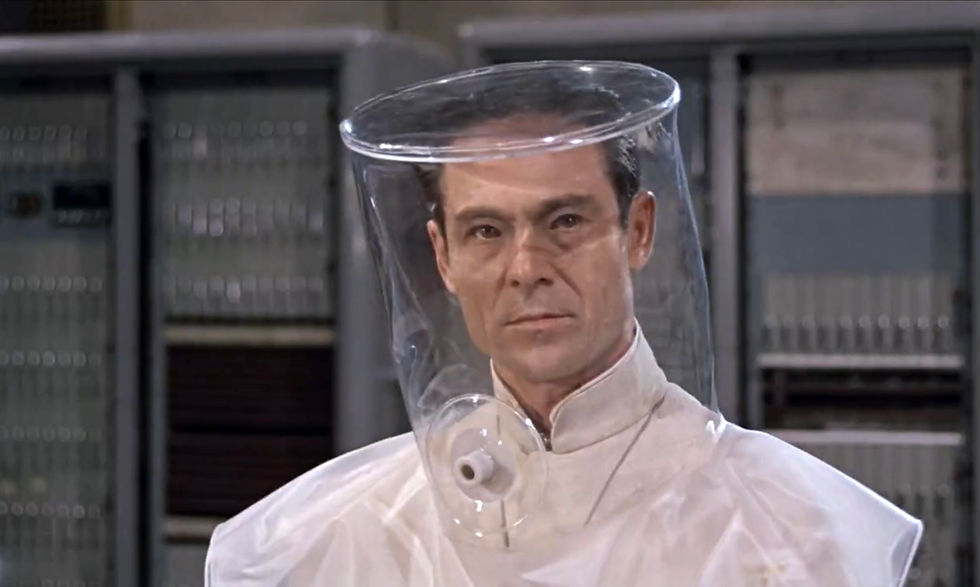

Against his parent's wishes, Joseph Wiseman began acting in theater at the age of sixteen, quickly turning professional, making his Broadway debut in the original 1938 production of "Abe Lincoln in Illinois". That production began a long and successful Broadway career that included eighteen shows over sixty-three years, including "King Lear", "Golden Boy", "Detective Story", "Judgment at Nuremberg”, and starring in the title role of 1968's "In the Matter of J. Robert Oppenheimer", which earned him a Drama Desk Award. Though Wiseman considered himself first and foremost a theater actor, he had an extensive film and TV career in 100 roles between 1941 and 1996, with movies like "Viva Zapata!", "Detective Story", "Les Miserables", "The Night They Raided Minsky's", "The Apprenticeship of Duddy Kravitz", and TV shows such as "Night Gallery", "The Twilight Zone", "The Untouchables", "The Streets of San Francisco", "Crime Story", "L.A. Law", and his final, an episode of "Law & Order”. He was married twice, widowed once. Joseph Wiseman died in 2009 at the age of 91.

A fun piece of trivia is that, in August of 1961, the painting "Portrait of the Duke of Wellington” by Spanish artist Francisco de Goya was famously stolen. A replica of it was put in "Dr. No's" lair as if he was the one who stole it. The painting was returned in 1965 by its thief, minus the frame.

Jack Lord plays “Felix Leiter”, a CIA operative in Jamaica trying to do his own investigation of “Dr. No”. Lord’s handsome, no-nonsense, and uncompromising air as “Felix” would surface again six years later as the star of “Hawaii Five-O”, which made him a TV-icon.


Brooklyn-born Jack Lord spent his teenage summers traveling the world aboard cargo ships owned by his father’s steamship company. During World War II, he served in the U.S. Army Corps of Engineers and later became a Merchant Marine. His interest in acting began while appearing in maritime training films, prompting him to study acting in New York City at both the Neighborhood Playhouse and the Actors Studio,. His film debut came in 1949’s “Project X”, his TV debut in 1952’s “The Hunter”, and his Broadway debut in 1954 with “The Traveling Lady” (earning him a Theatre World Award). Although his career was centered largely on TV, he appeared in fourteen feature films, including “Cry Murder”, “The Court-Martial of Billy Mitchell”, and “Man of the West”, and his more than sixty TV appearances include “The Untouchables”, “The Fugitive”, “Combat!”, “Stoney Burke”, “Rawhide”, and “Gunsmoke”.

Yet it was Lord's starring role as “Steve McGarrett” on the hit series “Hawaii Five-O” (which ran for twelve seasons beginning in 1968) that made him a household name. After the show ended in 1980, Lord largely withdrew from public life, with speculation it may have been due to the early onset of Alzheimer’s disease. A bronze bust of him now stands in a mall in Honolulu, Hawaii. Outside acting, Lord was also a dedicated artist throughout his life, selling two of his works to the Metropolitan Museum of Art. He was married twice. Jack Lord died in 1998 at the age of 77.
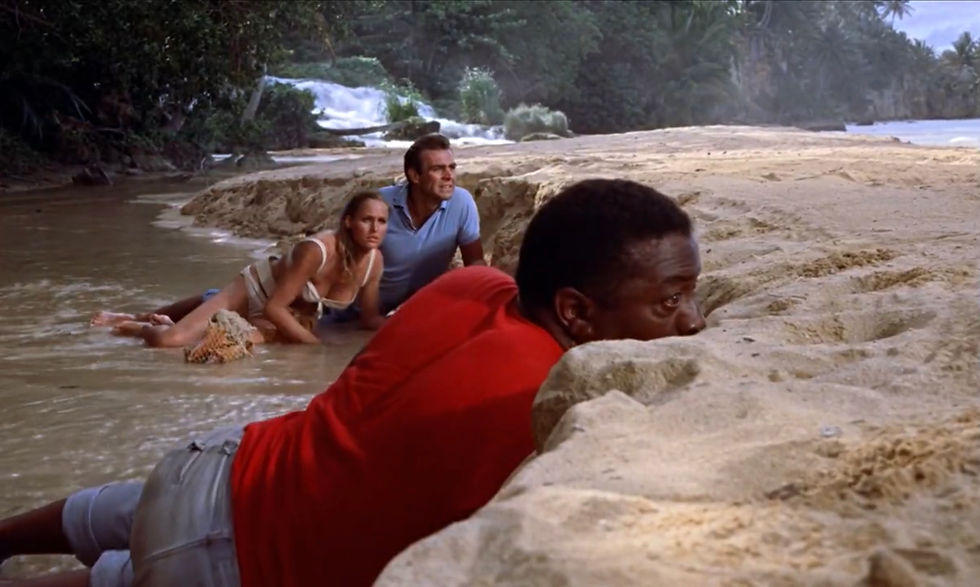
John Kitzmiller portrays “Quarrel”, a fisherman, sailor, and islander wrapped up in the middle of the investigation. Someone we're not sure about in the beginning, "Quarrel" turns out to be a loyal, smart, and trusted friend, and Kitzmiller gives this character a winning personality with humor, warmth, kindness, courage, and the uncanny ability to sense danger just before it arrives. As far as the investigation of “Dr. No”, “Quarrel” is really "Bond's" only trusted friend and ally.

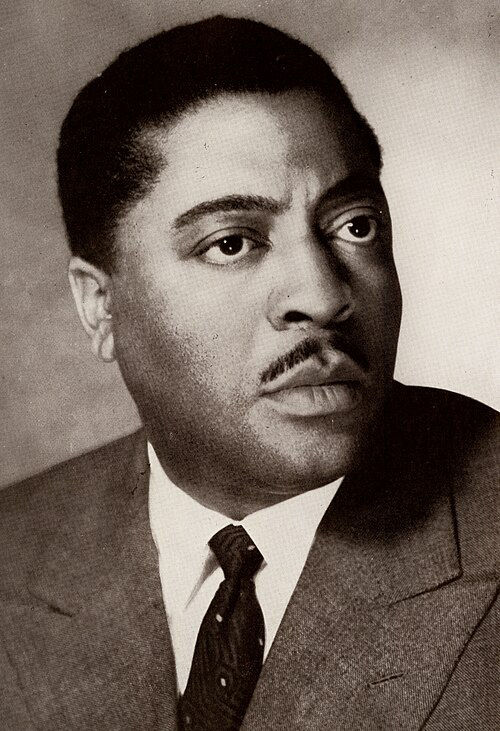
After serving as an Army captain in the 92nd Infantry Division during the Liberation of Italy in World War II, Michigan-born John Kitzmiller chose to remain in Italy, partially because both his parents died during his war service, and also, being Black, he felt there were more opportunities for him in Europe than in the United States. As fate would have it, Italian film director Luigi Zampa and producer Carlo Ponti spotted him playing poker and cast him as an American soldier in their 1947 Italian neorealist film "Vivere in pace" ("To Live in Peace"). This began a very successful film career for Kitzmiller in Europe and the United Kingdom, appearing in 47 films (starring in many of them) and eight TV shows, including 1948's "Without Pity" written by Federico Fellini, Fellini's "Variety Lights", "The Naked Earth", "Terra straniera”, and the Slovenian film "Dolina miru" ("Valley of Peace"), for which Kitzmiller became the first Black actor to win the Best Actor Award at the Cannes Film Festival. His final role was as "Uncle Tom" in a 1955 European version of "Uncle Tom's Cabin". "Dr. No" remains his best known film in America. A purported alcoholic, two months after his first marriage, John Kitzmiller died of cirrhosis of the liver in 1965 at the age of 51.
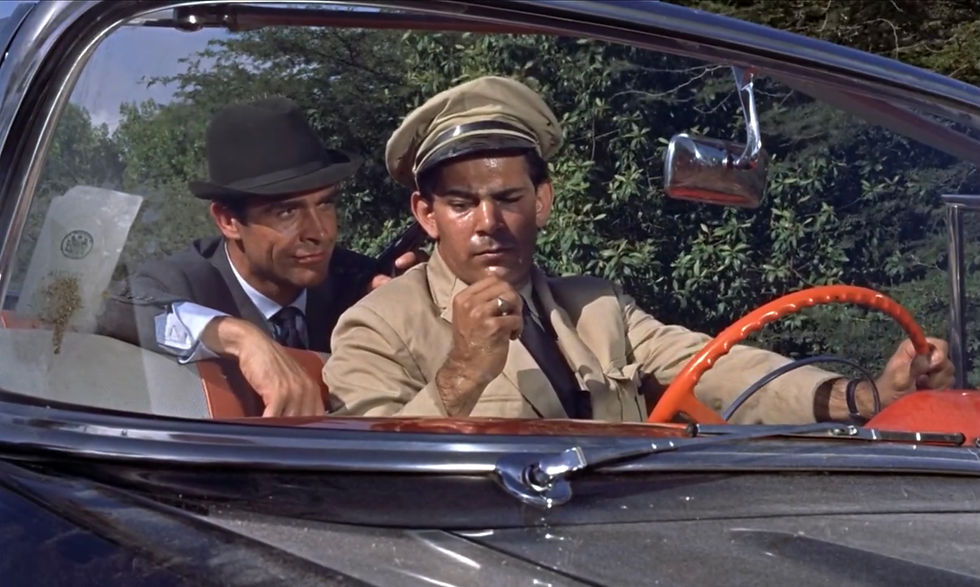
The exteriors in "Dr. No” were nearly all filmed in Jamaica, and many Jamaican locals were cast in small roles and as extras, giving “Dr. No” an added sense of authenticity. Among them was Jamaican actor Reginald Carter, making his film debut as “Mr. Jones”, the chauffeur who meets “Bond” at the airport.

Also local was Marguerite LeWars, the reigning Miss Jamaica and a contestant in the 1961 Miss Universe pageant, who plays photographer “Annabel Chung” in her only film role.

Byron Lee and the Dragonaires appear as themselves at the nightclub. Already Jamaica’s most famous band, they helped introduce Caribbean music to international audiences and added enormously to the film’s vibrant island feel.

Several key actors in “Dr. No” became essential parts of the Bond formula, including English actor Bernard Lee as “M”, the stern head of the British Secret Service, a role he would reprise in the next ten Bond films.

Equally memorable is Canadian actress Lois Maxwell as “Miss Moneypenny”, “M’s” loyal secretary — a role she would play in fourteen consecutive Bond movies.
A special mention must go to “Dr. No’s” superb music, which introduced the now-iconic James Bond theme. Composer Monty Norman was originally hired to write both the score and the theme, but the producers were reportedly dissatisfied with what he wrote and brought in composer and arranger John Barry to improve it. Debate over who truly created the iconic theme led to years of controversy and even a court case, with a London court ruling in 2001 that Norman composed the theme and Barry arranged it. However it originated, the result became one of the most recognizable musical signatures in history, instantly evoking the danger, glamour, and sensual excitement of Bond. Norman also wrote the film’s Jamaican songs, further enriching the film’s distinct atmosphere.

To date, seven actors have played “James Bond” in a total of twenty seven films:
Sean Connery from 1962 to 1967, 1971, and 1983 in “Dr No”, “From Russia With Love”, “Goldfinger”, “Thunderball”, “You Only Live Twice”, “Diamonds are Forever”, and “Never Say Never Again” (a non-EON production).
David Niven in 1967’s “Casino Royale” (a non-EON production).
George Lazenby in 1969’s "On Her Majesty's Secret Service”.
Roger Moore from 1973 to 1985 in “Live and Let Die”, “The Man with the Golden Gun”, “The Spy Who Loved Me”, “Moonraker”, “For Your Eyes Only”, “Octopussy”, and “A View to a Kill”.
Timothy Dalton from 1987 to 1989 in “The Living Daylights” and “License to Kill”.
Pierce Brosnan from 1995 to 2002 in “GoldenEye”, “Tomorrow Never Dies”, “The World Is Not Enough”, and “Die Another Day”.
Daniel Craig from 2006 to 2021 in “Casino Royale”, “Quantum of Solace”, “Skyfall”, “Spectre”, and “No Time to Die”.

This week’s pick is not only exciting entertainment, but also cinema history. The Bond movie that began it all — enjoy “Dr. No”!
This blog is a series exploring classic films from the silent era through the 1970s. Each post recommends a film to watch, aiming to entertain, inform, and deepen your appreciation of cinema — its stars, directors, writers, the studio system, and more. Be sure to visit the HOME page to learn more, and check out THE MOVIES page for a full list of films. Please comment, share with others, and subscribe so you never miss a post. Thanks for reading!
YOU CAN STREAM OR BUY THE FILM ON AMAZON
OTHER PLACES YOU CAN BUY THE FILM:
As an Amazon Associate I earn from qualifying purchases, and any and all money will go towards the fees for this blog. Thanks!!


What a great post Jay. Love the bond movies. In fact, the first time I saw any of them they were having a double header at the theater - running Dr No and From Russia With Love - back in the mid 60's. Sean Connery was born to play the bond role along with Daniel Craig - both of my favorite bond actors.
Best Regards,
Stuart
This movie is sofisticated and fun! You can watch any of the Bond films any day at any time and it is always an ejoyful experience. It builds the world, look and essence of James bond future movies, as you said Jay thanks to his director vision!! Remarkable work in my opinion! I think Sean does a marvelous work as a agent 007 but I think Cary Grant would have been so perfect for the part as well! In fact I was thinking so while watching the movie and after reading your blog aand find out that he was considered for the part I am surprised he did not get it! specially after playing North by Northwest. He would have…
"Are you looking for something?", "No. I'm just looking". I always loved that line! Thanks for another great review Jay!