


195. A TRIP TO THE MOON, 1902
Updated: Sep 18
The landmark achievement that brought magic to the movies

Don’t let its short, approximate 14-minute runtime fool you, “A Trip to the Moon” (“Le Voyage Dans La Lune”) packs enough originality that it forever changed cinema. The most famous film by Georges Méliès, a defining pioneer of cinema, its massive success helped transform movies into a storytelling art form, while also leading the way for science fiction films. More than just a milestone, it remains a fun and frolicsome spectacle whose imaginative visuals and spellbinding effects have kept it delightfully captivating to this day.

If you want to avoid spoilers, skip this and the next paragraph until after you’ve watched it. "A Trip to the Moon's" simple, playful story draws on two Jules Verne novels — 1865’s “From the Earth to the Moon” and the 1870 sequel “Around the Moon”. The film opens in a hall of astronomers, where their president, “Professor Barbenfouillis”, proposes a trip to the moon. A skeptic is pushed aside, while five others agree to join him. They suit up, inspect their bullet-shaped spacecraft, and even watch metal being cast for its final construction. Once ready, they board the ship and are ceremoniously launched from a cannon, landing smack dab in the Man in the Moon’s eye.

The astronomers emerge from their ship, watch Earth rise, and witness a strange explosion before falling asleep. As they sleep, a comet passes, stars react angrily at their presence, planets appear, and the moon goddess makes it snow. Awakened by the cold, they descend into a crater of giant mushrooms and encounter acrobatic aliens who capture them and bring them to their king. The astronomers escape back to their ship, the craft heads back to Earth, plunges into the ocean, is rescued, and returns to shore for a celebratory welcome, complete with a dancing captive alien and an honorary statue.

“A Trip to the Moon” was made about six years after the invention of cinema, and though in some aspects it might look rudimentary today, it was cutting edge cinema when made. To understand this and fully grasp what a monumental breakthrough and trailblazer it was, one needs a bit of context and knowledge of the very beginnings of cinema, which I’ll do my best to briefly provide. Let me start with a question: When a horse gallops, are all four of its legs ever off the ground all at the same time?

Sounds like a riddle, right? Well, it’s actually the question that helped spark the invention of cinema. In 1878, photographer Eadweard Muybridge set out to answer that question by photographing a series of images to capture a running horse. He lined up multiple cameras with trip wires that triggered each shutter as the galloping horse passed. When the images were viewed in quick succession, it looked as if the horse was running. This sparked the idea that rapidly seen sequential photographs could create the illusion of motion — setting off a global race to develop “moving pictures”.

Inventors around the world were now scrambling to create "moving" images — with inventions like George Eastman's celluloid film strip, Thomas Edison's Kinetoscope, and others. Though no single person can be credited with inventing movies, this wave of innovation climaxed in Paris on December 28, 1895, when French brothers Auguste and Louis Lumière unveiled their Cinématographe (a film camera and projector), with the first commercial public screening of motion pictures — a moment widely regarded as the birth of cinema. They showed ten short films, each about 35–45 seconds, depicting simple scenes of life, like workers leaving a factory, Auguste feeding his baby daughter, boys playing in the sea, and the hustle bustle of life at Cordeliers' Square in Lyon (click on the descriptions to watch them). Audiences were gobsmacked at seeing still images come to life.

With this excitement (and the money it made from packed houses with people lined up outside), global film production quickly spread, with France at its center. Before 1900, nearly all films were under a minute long, shot in sunlight, and composed of a single static wide shot, typically capturing brief slices of life (real or staged), like vaudeville acts, historical events, actual places, or simple human moments.

Inklings of storytelling were only beginning to emerge. Early examples include one of the ten original Lumière films, “L'Arroseur arrosé” (“The Waterer Watered”) and Edison’s “Washday Troubles” (also in 1985), both showing someone playing a prank on another person. Alice Guy-Blaché’s 1896 short “La Fée aux Choux” (“The Fairy of the Cabbages”), a now-lost film about a couple, a farmer, and a baby, is often cited as the first narrative film. Still, all in all movies remained little more than visual snapshots of life, filmed episodes, or travelogues, valued more for the novelty of motion than for storytelling. Then came Georges Méliès.
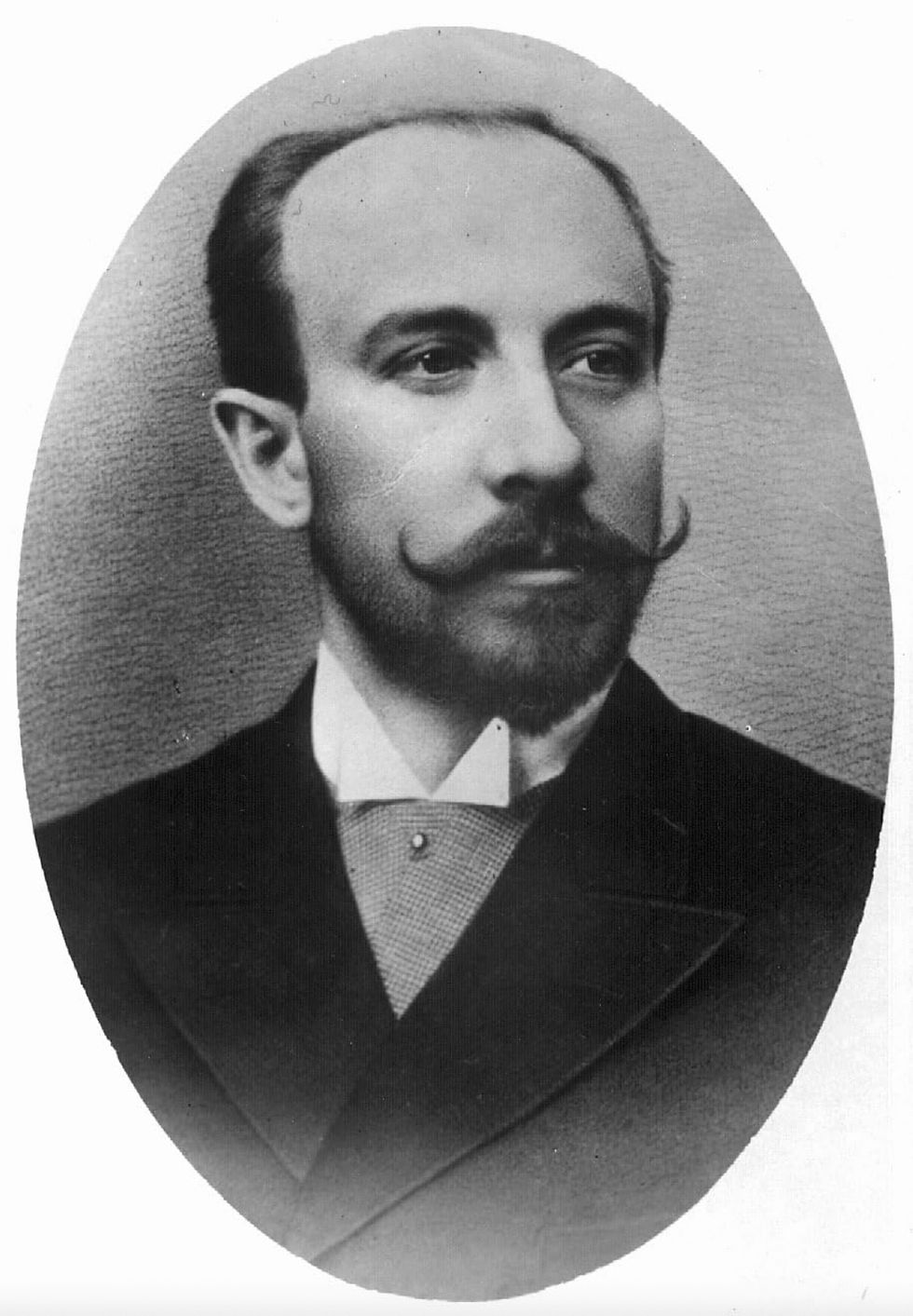
Born in 1861 in Paris, Georges Méliès was very creative from the start. As a child, he loved to draw, and by the time he was a teenager, he was building puppet theaters and sophisticated marionettes. He learned to sew while working in his parents’ shoe factory, and later worked there as supervising machinery mechanic . While in London, working and learning English, Méliès fell in love with stage magic and illusion. He spent nearly a decade studying magicians and taking lessons to master the craft. By 1888, he purchased and renovated Paris's Théâtre Robert-Houdin. There, he invented dozens of original illusions and staged extravagant, wildly popular magic shows. The day before the Lumière brothers’ historic first screening, Méliès was invited to see a demonstration of their Cinématographe. Immediately enthralled, thinking it would be an amazing enhancement to his magic shows, Méliès repeatedly asked to purchase one of their machines. Wanting to protect their scientific invention and feeling it was without commercial value, the Lumières refused to sell him one. So Méliès created his own version by modifying a British camera and teaching himself how to process, develop, and print his own movies. He also invented a machine to perforate film stock so it could feed on sprockets. While others wanted to bring movies to the world, Méliès thought movies could bring the world to audiences. That distinction would soon pave the way for cinema as we know it today.

After making about two dozen films (many similar to those of the Lumières), while filing outside the opera house for his 1896 film "Place de l'Opéra", Méliès' camera jammed for a few seconds just as a bus was passing by, and resumed just as a hearse passed. When he watched the footage it appeared as if the bus turned into a hearse, and people in the background seemed to vanish and reappear. In that instant, he discovered trick photography — making things seem to appear, disappear, and transform by stopping the camera, altering the scene, and then continuing to film.

This was a magician’s dream. It opened his mind to the possibility of a world of special cinematic effects, and he began experimenting with things like stop motion, double and multiple exposures, slow and fast motion, superimposition, dissolves, fade-ins, fade-outs, using proximity to the camera to play with size, making people and things appear and disappear or transform into something else, and making inanimate objects seemingly come to life. He pioneered many of these effects, used them in new ways, and came to be known as “The Father of Special Effects”.

To gain full control and avoid the delays of dealing with wind and rain while filming, Méliès built a glass greenhouse-style studio (completed in 1897) — considered the first permanent film studio in history. Since he came from the theater, he designed it like a theater, with the action played at one end and the camera fixed at the other, as if it was the audience. He had actors play towards the camera (as if on stage), and some of his early films feel like watching a magician doing a stage act. He kept this theatrical format for all his movies, though they’d become more and more complex.

Unlike his contemporaries, Méliès carefully preplanned all his films. He wrote or adapted the material, designed sets, painted backdrops, choreographed movement, created costumes and props, devised mechanical effects, acted in many of them (he plays "Barbenfouillis" and the face of the moon in "A Trip to the Moon"), edited, and produced them. This fully hands-on approach was yet another first, bringing an unprecedented level of planning and control to moviemaking. As his success grew, he built additional buildings to house props, construction materials, set painting, and storage for more than 20,000 costumes (the blueprint for all major studios that followed). He created his own Star Film Company (whose slogan was "The Whole World Within Reach”) — the first company ever devoted solely to filmmaking.

Another way Méliès’ changed movies, was how he began combining what he called “artificially arranged scenes” into a single, continuous story. Instead of having all the action play out in one 50-second shot, he linked multiple shots, each one advancing the action. “A Trip to the Moon”, for example, uses 17 “artificially arranged scenes” — from the planning meeting, to building the ship, watching the liquid metal being poured, boarding the ship, launching the ship, reaching the moon, landing, and so on. If you watch any of the Lumière films above and compare them to “A Trip to the Moon”, you’ll understand exactly how much more depth, complexity, and interest Méliès’ additional “artificially arranged scenes” generate.

“A Trip to the Moon” became an international sensation and made Méliès world famous. Longer than most films if its day, humorous, and incredibly imaginative, it demonstrated for the first time that telling a story could draw people to the movies. His work truly marks the beginning of narrative filmmaking. In addition, the film’s fantasy theme brought the world of escapism to cinema, and his motif of a spacecraft, planets, aliens, and tremendous special effects pioneered the way for science fiction films (many consider “A Trip to the Moon” the first of the genre). Méliès was the first to shift cinema from a record of life to a creative expression

In his 17-year career, Méliès made over 500 films (more than half are now lost), crafting a distinctive world of witty, imaginative illusion and fantasy. Some works satirized the era’s scientific and technological trends, earning him recognition as the screen’s first satirist. Just some of his other films include “The Astronomer's Dream”, “Gulliver's Travels Among the Lilliputians and the Giants“, “The Man with the Rubber Head”, “The Kingdom of the Fairies”, “The Impossible Voyage” , “The Vanishing Lady”, and “The Conquest of the Pole”. You know the saying “the magic of the movies”? Well Méliès was really the first to bring the “magic”.

Because of his worldwide popularity and the weaker copyright laws they had compared to today, Méliès’ films were widely exploited. Distributors profited off them, imitators produced inferior copies, and illegal bootlegs circulated (reportedly even by Thomas Edison). To combat this, Méliès opened a Star Film office in New York, run by his brother. Even so, piracy continued to devastate him financially.

In 1910, he signed a deal with Charles Pathé, allowing Pathé Frères to edit and distribute his films in exchange for production funding — with his studio and home as collateral. The arrangement proved disastrous. His first two films were expensive failures, a third was edited down nearly in half by Pathé and failed, with two more failures re-edited by others. Bankrupt, Méliès broke the contract in 1913 and never made another film. During World War I, the French Army took over his studio and melted down over 400 of his original film prints for silver and celluloid to make soldiers’ boot heels. Méliès had lost nearly everything, including Star Films and the Théâtre Robert-Houdin. Bitter and despondent, he burned many of his remaining film negatives, movie sets, and costumes.

Broke and largely forgotten, in 1925, Méliès married for the second time, this time to actress Jehanne d'Alcy (who appears as a secretary in “A Trip to the Moon”), and they opened a toy and candy shop. Around this time, a renewed interest in his films and career began bubbling with articles, a memoir commission, and a major retrospective in 1929. In 1931, he was awarded France’s Legion of Honour. Méliès died of cancer in 1938 at the age of age 76. The last part of his life inspired the 2007 Brian Selznick novel “The Invention of Hugo Cabret” and the 2011 Martin Scorsese film “Hugo”.
Some of Méliès’ films were originally released in both black-and-white and hand-tinted color. In a Paris coloring lab, workers applied a single color to each frame in an assembly-line process, producing about sixty hand-colored prints per title, with no two exactly alike. Many of these color versions have been lost, leaving mostly black-and-white prints today. Two incomplete black-and-white prints of “A Trip to the Moon” were discovered around 1930, and a hand-colored version was found in 1993 and restored in 2011.

While Méliès made many imaginative, entertaining films, “A Trip to the Moon” remains his most famous and the one that helped transform cinema into an artistic storytelling medium. One of the most celebrated films of the silent era, its image of the rocket striking the Man in the Moon’s eye is among the most iconic in film history. This film’s influence paved the way for narrative filmmaking and for innovations that followed — close-ups, camera movement, cinematography, sound, and digital effects — that further enhanced the telling of celluloid stories. Méliès’ early contributions laid the groundwork for modern cinema, making him one of the most important and influential figures in cinema.

Méliès inspired countless filmmakers, including Walt Disney, Tim Burton, Terry Gilliam, Georges Lucas, and Ridley Scott. D.W. Griffith said of Méliès, "I owe him everything”, and Martin Scorsese said "he invented everything, basically, he invented it all".

This week’s film isn’t just a delight, but a window into cinema’s beginnings. By seeing how it all started, we can better understand the medium itself, and more fully appreciate the creativity and innovation behind today’s films. Enjoy “A Trip to the Moon”!
This blog is a series exploring classic films from the silent era through the 1970s. Each post recommends a film to watch, aiming to entertain, inform, and deepen your appreciation of cinema — its stars, directors, writers, the studio system, and more. Be sure to visit the HOME page to learn more, and check out THE MOVIES page for a full list of films. Please comment, share with others, and subscribe so you never miss a post. Thanks for reading!
You can watch a restored black and white version of "A Trip to the Moon" here (it make take a few seconds to start):
YOU CAN BUY A COMPLETE COLLECTION OF MELIES' FILMS HERE:
YOU CAN BUY THE COLOR-TINTED REMASTERED "A TRIP TO THE MOON" HERE:
As an Amazon Associate I earn from qualifying purchases, and any and all money will go towards the fees for this blog. Thanks!!


Comments